Showing posts with label Lares. Show all posts

Wednesday, April 24, 2019

A Puerto Rican Look at: Y-DNA67 (Avilés/Magraner)

***Si eres descendiente de los Magraner de Sóller, Mallorca, especialmente a través de Damián Magraner Morell o uno de sus hermanos, me gustaría hablar con usted para ver si podemos establecer una conexión genética. Puedes dejar un comentario aquí en este blog para contactarte conmigo. ¡Muchísimas gracias!***

While in Puerto Rico for Spring Break, one of my goals was to test various family members through various companies. Since I don't have easy access to men who carry Avilés and Correa Y-DNA like I do the Rivera line (myself being a carrier of this Y-DNA group) since those members live in Puerto Rico, I decided I would focus on getting a male cousin from my Avilés family and my Correa grandfather to test. I decided to buy two Y-DNA67 exams for them from FTDNA. Recently, they had a DNA day sale and I decided to myself a Y-DNA111 exam to test my Rivera branch as well. So those are boxes I can check off on my genealogical goals for 2019! This blog will focus solely on my Avilés Y-DNA results.

Buying a FTDNA Y-DNA test is not cheap! I would recommend to get these tests if you are an experienced genealogist interested in learning more about your Y-DNA group or an amateur genealogist trying to crack a wall in your direct paternal family. I have been fortunate to test various branches and I have done so for genealogical purposes such as: Establishing whether I have an African or European Guadeloupean Y-DNA group (Charles family), potential Jewish/Arab Y-DNA group (Correa family), Mallorcan connection to the Magraner family (Avilés family), and trying to establish a stronger connection for a relatively uncommon haplogroup (Rivera family). 

Family Tree DNA Home Page [FTDNA]

Background

For anyone that has been following my blog (thank you kindly!), you have probably seen the surnames Avilés and Magraner various times throughout many old posts. My trying to solve this family's mystery dates back to the beginning of my blog in 2011, wondering about my 2nd great-grandfather's origins. I spent time researching and writing about José Avilés Magraner in 2014 for the 52 Ancestors Challenge. I learned the name of my potential 3rd great-grandfather, Damián Magraner Morell, and traveled to Sóller, Mallorca a year later in 2015, his hometown, to learn more about the man who made his way to Río Prieto, Lares, Puerto Rico. The closest I've gotten to confirming this on paper has been José's brother Lorenzo Avilés who mentions Damián Magraner  on his Social Security Application as his father. I stepped on Lares land for the first time in many years in 2017 but didn't make it up to Río Prieto. This year though I did! 

Also, having a DNA match with a fellow genealogist with a grandmother  from Sóller, Mallorca through various family members connected to the Avilés family helped me to help prove that genetically there is something there! 

Collecting DNA

With my grandmother and great-aunts in tow we headed over to Río Prieto by car, my great-aunt wasn't too comfortable driving up the steep and narrow roads so I took charge of getting us there. The ride ended up not being too bad and I got to visit a few members connected to my paternal grandmother and great grandmother, I was introduced to the family as "el nieto de Carmen" (the grandson of Carmen) since they had never met me before and my dad spent his childhood between San Juan and New York and not in the mountain town of Lares. The ride over was amazing and here are some photos of getting to and being in Lares, it was amazing to see the land transform as we made our way up the mountain! 
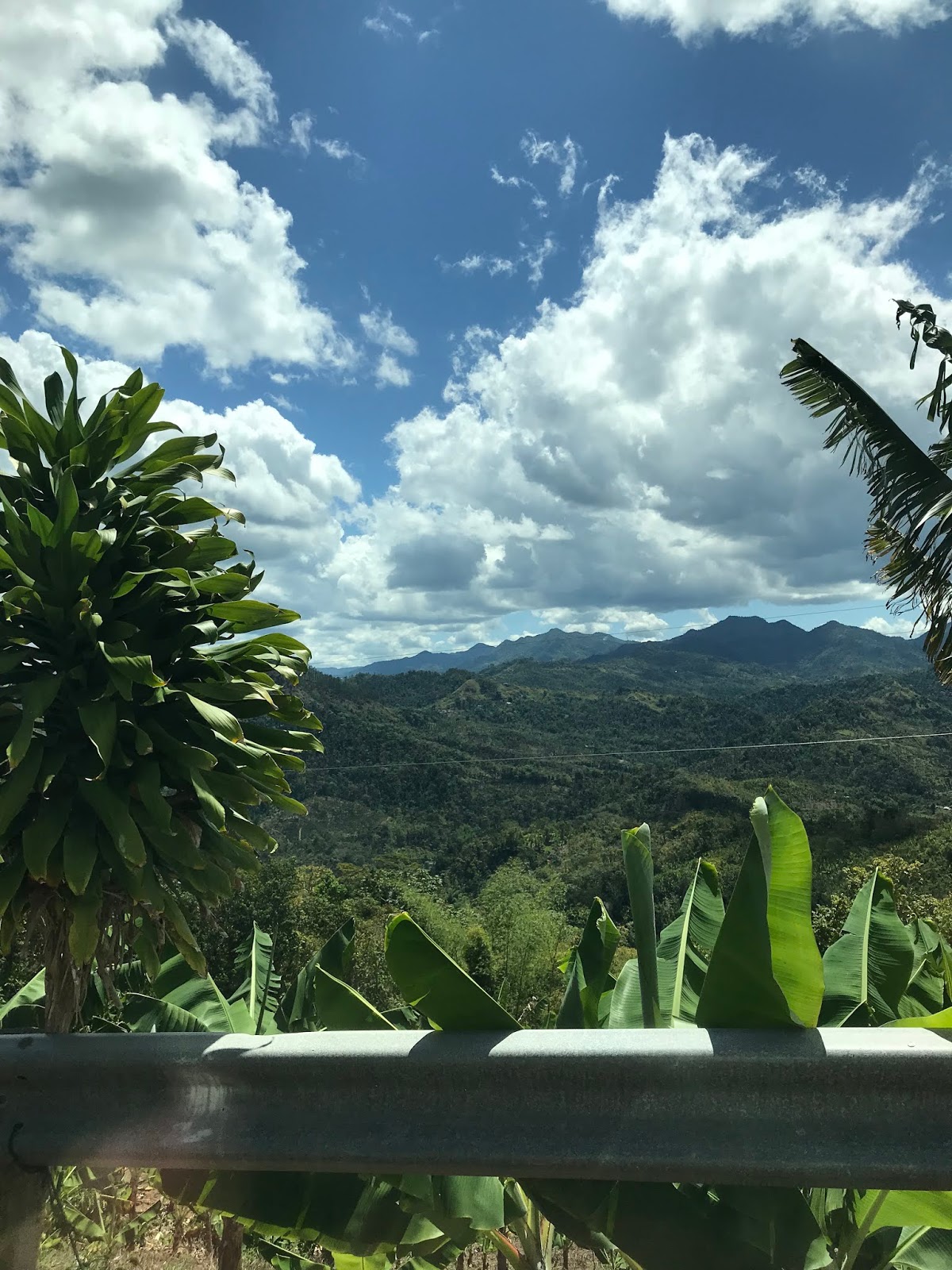
Driving up the mountain [Personal Photo]


Nature at its best! [Personal Photo]

The view from my cousin's land [Personal Photo]

The "two way road" near my cousin's land [Personal Photo]

Our first stop was the house of my 1st cousin 2x removed. After seeing his land, talking about the effects of Hurricane María, and being gifted many fruits, I gathered up the courage to ask if he was willing to take two DNA tests for me. I was a bit scared he would say "no" for fear of not knowing what the test would do, but he was very willing to help out. I collected his DNA, wrote down some important information, and when we got back to San Juan mailed off the DNA test. 

My reason to test this line was because I wanted to know where in the world it was connected to and whether or not it could prove that my family was related to the Magraner family. The test results came back pretty quickly and so I took a look at them!

Interpreting results

Magraner Haplogroup? [Personal Photo]

Getting a Y-DNA67 gave me basic results, in the sense that R-M269 is a fairly common group and doesn't give too many specifics into the smaller, more recent branches of this Y-DNA branch. My next step would be to upgrade the test to get more detailed results and potentially make more educated results of my connection in R-M269. Under matches, I currently have 2 matches at the Y-DNA67 level but at a genetic distance of 5 and 7, this would mean that our connection is much farther back in history versus having a genetic distance with a smaller number which would mean having a closer relationship in generations. My genetic cousin at the "genetic distance 5" reached out to me and we quickly chatted and noticed our relation was too far to discover at the moment but interestingly noticed that our surnames both had to deal with fruits - Magraner being a surname connected to the pomegranate tree! Lowering my markers to 37 for example gives me more matches but again, at a pretty far distance. The cousins seem to be wide spread across various countries in Europe, I do have some matches from Puerto Rico but they are at Y-DNA12 which is fairly distant as well. As you can see below my Y-DNA67 match has recent roots in the US but he said his family has older roots in southern France.

Y-DNA67 Match [Personal Photo]

My goal is that by hopefully writing about this branch and taking a Y-DNA test I'll be able to confirm my connection to the Magraner family of Sóller, Mallorca. If you descend from this branch, I'd love to chat and see if we can figure out our potential connection!

Conclusion

Though in a sense my results were "inconclusive", there still is hope! Y-DNA usually takes longer from what I know to establish stronger connections because it's such a specific group that is being tested versus for example autosomal DNA. 23andme has given me a bit of a deeper glance into the R-M269 group and hopefully as I upgrade to Y-DNA111, I will have stronger/clearer results and hopefully a Magraner descendant tests as well. This will in turn allow me to make a genetically educated guess about my Avilés family and whether our roots really are in Mallorca. 

Haplogroup R-Z209 [Personal Photo]

Here's to hopefully solving a 128 year mystery in the making! 

Sóller, Mallorca [Google Images]

Wednesday, March 27, 2019

Testing, Testing...

DNA tests ready to go! [Personal Photo]

Just like that I'm back home from my spring break trip to Puerto Rico! Though it was a quick trip I was able to get a lot of genealogical work done, among one of those tasks was fulfilling my goal to get DNA testing done from various companies (FtDNA, 23andMe, and AncestryDNA) from various relatives. These test are in line with my genealogical New Year's Resolutions of getting my Avilés and Correa line Y-DNA tested and adding more autosomal cousins to the mix of relatives currently tested. Here's the breakdown of the testing I got done while in Puerto Rico.

AncestryDNA

This DNA test was only one and it was an autosomal test for my maternal grandfather. I wanted to add him to AncestryDNA since they also have an African breakdown that I would like to see how he scores in and also to widen the pool of genetic cousins I receive. Though AncestryDNA isn't my first choice for autosomal DNA testing since you don't get the maternal/paternal haplogroup(s) or chromosome segments, I decided to add him anyways. 

23andMe

For this one, I got two autosomal DNA tests done. I brought an extra DNA test just in case I came across another cousin but I decided to test two Avilés cousins from Lares, Puerto Rico since I was already there and could benefit from having two cousins from this line. One test was for my 1st cousin 2x removed, his father was my great-grandmother's full brother, and he's a male descendant from the Magraner line - having him tested will help separate out my DNA from my 2nd great-grandparents in DNA Painter. I also tested my 2nd great-uncle, son of my 2nd great-grandfather and from his second wife. I'm hoping that by testing another generation closer to my 2nd great-grandfather connections to Spain will be stronger. Interestingly enough, my 2nd great-uncle's mother, though not my 2nd great-grandmother is my 2nd cousin, 4x removed - her paternal grandfather is my 5th great-uncle via a line that came from Yauco to Lares, Puerto Rico... that'll be interesting to see how it interferes with the DNA segments we match together!   

FtDNA (Y-DNA 67)

Y-DNA Test [Personal Photo]

This was my first time getting a Y-DNA test done in recent years, I had tested a Gustave/Charles cousin a few years back and so far I don't have any super helpful/relevant matches, besides the fact that it's a European line that matches men from the UK/Ireland/Scotland area. It was, however, the first time I administered a Y-DNA test myself. I tested two men on this trip - my 1st cousin, 2x removed and my maternal grandfather. Some people aren't very interested in haplogroup testing but for me these two tests will help shine some light into two very mysterious lines. My Avilés line which is supposed to be Magraner from Sóller, Mallorca and my Correa line which I'm not sure where it's from and 23andMe says the line is commonly found amongst Arabs/Jews. Hopefully these tests will help better understand those lines in my family. 

Cheek swaps ready to go! [Personal Photo]

Once my DNA results appear for these various tests I'll update with some posts my findings. I'm glad I was able to get this done and excited as well to learn more about my family!

Wednesday, June 28, 2017

Travel Tuesday - Lares, Puerto Rico

Late again on this Travel Tuesday and pretty late seeing as how I took this trip last March but I wanted to highlight my quick trip to Lares, Puerto Rico.

Last year in March 2016, for Spring Break, I took a trip to Puerto Rico where I spent time with my grandmother both searching records across the island and visiting various towns where my ancestors had lived. Though my maternal grandmother's family is not from this town she was more than happy to join me on this journey. The drive to Lares was a little over 1 1/2 hours which isn't too bad though most on the island might feel differently since travel is so subjective especially on such a small island.

Drive from San Juan to Lares, Puerto Rico [Google Maps]

Growing up I had heard a lot about Lares, it was the town of my grandmother's mother Rosalia Avilés González who I had the luck of meeting very young in Lares, though I didn't remember much about the trip except her face and taking pictures with her. This is also the town of José Avilés Magraner, one of my ancestors whose story started this genealogy journey. He was the ancestor who was said to be the product of a Spanish man and an indigenous woman, and 13 years on this journey has brought me to understand that his father was actually a Spanish man though his mother was most definitely a mix of typical Puerto Rican genes and not just a Taíno woman as family lore told.

So needless to say, I was very excited about visiting Lares.

My Journey to Lares

My Great Grandmother - Rosa Avilés [Personal Photo]

My journey to Lares started not from San Juan but actually in Utuado, since I was there searching for land records for Lares, I actually had to go to Utuado where the records where physically held. Luckily, I was able to find information about Jose's land in Lares and who it went to once he died. I spent most of the day in Utuado searching and then headed over to Lares for a quick stint and sadly didn't have enough time to go to Río Prieto where my distant family lives. Since it was late we didn't want to get caught climbing the various mountainous roads and hills in the dark especially since I wasn't an experienced driver on the roads of Puerto Rico. Most of the things on my trip were easy to find with the help of GPS, though I was told Río Prieto was a whole another beast to handle.

Center Plaza of Lares [Personal Photo]

Most of our time was spent downtown in Lares' center since we didn't want to venture too far off. We walked around the plaza named after El Grito de Lares also known as the Lares Revolt or Uprising which began in September of 1868. In the plaza you can see Lares' main catholic church, the one many of my ancestors were probably baptized and married at.

Parroquia San José [Personal Photo]

Lares' flag is very synonymous with the Grito de Lares and is very proudly displayed in many parts of the town. We ended up going to one of the heladerías near the main square since the main heladería that was popular for selling interesting flavors was shut down. We got some ice-cream and then walked around the little shops checking out souvenirs. I ended up buying a Lares flag and after chatting with the cashier, we found out that the lady who worked in the shop with her sister actually lived very close to where my grandmother lived in San Juan. 

Bandera de Lares [Puerto Rico]


Steep streets of Lares [Personal Photo]

After that we got in the car and headed back towards San Juan since we didn't want to be out too late and we had already spent most of the day sitting in an office checking old records. It was nice seeing the main part of Lares and my goal next time is to make it up to Río Prieto. We still have family members who live there and own land and they hold various events throughout the year, some around the Christmas/Three Kings' Day celebrations which I would love to be able to attend and actually get to meet many of them. 

It's definitely a town that our family goes back to constantly throughout the year and I'm always a bit jealous when I see my cousins or aunts/uncles head that way but here's to hopefully that I'll be able to join them sooner rather than later. 

Wednesday, July 13, 2016

A Puerto Rican Look at: Colorized Pedigrees!

I've been seeing these style of pedigrees online for a while now and decided I should give it a go! Thanks to Zalewski Family Genealogy blog  I was able to use the template and create my very own pedigree. Because my family has been on the island of Puerto Rico for over 200+ years, I didn't think it would have made sense to create a chart with just the same color over and over again to represent Puerto Rico. With this template I was able to include up to my 3rd great grandparents, which are 32 different ancestors! I was able to include their surnames on the side as well, giving you an idea where my family surnames originate from on the island. It was interesting seeing how diverse my family tree is in terms of locations. If you notice, it was only recently that my family came to the capital of San Juan with 3/4 of my grandparents being born there, though all of them spent their formative years growing up and living there. If you take a further look, my family has been present on the island for those 200+ years in almost all my branches, there is only one ancestor that made the cut for being from another place and that's my 3rd great grandfather from Mallorca, Spain.

I definitely had a lot of fun doing this pedigree and there are so many other styles you could do as well! Though morbid, I'm thinking of creating a pedigree with family deaths to see if there are any recurring patterns and to have an idea of what is potentially passed down in my family. You could also even create a pedigree with signatures of your ancestors! Though I would love to create one, unfortunately most of my ancestors didn't know how to write since they were all farmers and barely attended school past what we know as elementary/middle school.

Colorized Pedigree [Personal Photo]

I'm not sure how common it is to move so much to different cities but if you notice my mother's side of the family, they were notorious for making moves across the island. My father's side on the other hand seems to stick more to certain towns. For example, we have been in the towns of Corozal, Lares, and Toa Alta for many many years on my dad's side of the family. To give you an idea, here's a list of all my family locations which include 20 different locations on the island, those being: 
  • Adjuntas, Puerto Rico
  • Barranquitas, Puerto Rico
  • Corozal, Puerto Rico
  • Jayuya, Puerto Rico
  • Lares, Puerto Rico
  • Maunabo, Puerto Rico
  • Manatí, Puerto Rico
  • Morovis, Puerto Rico
  • Patillas, Puerto Rico
  • Quebradillas, Puerto Rico
  • Salinas, Puerto Rico
  • San Juan, Puerto Rico
  • San Sebastián, Puerto Rico
  • Toa Alta, Puerto Rico
  • Utuado, Puerto Rico
  • Vega Baja, Puerto Rico
  • Vieques, Puerto Rico
  • Yabucoa, Puerto Rico
  • Yauco, Puerto Rico
  • Mallorca, Spain
I recommend any genealogist who enjoys working with their tree to give this a go. It was super easy to create and could make a very cool poster for a wall! You could even include names and dates to give it more importance as well! 

Monday, July 11, 2016

Searching el "Registro de la Propiedad"

While in Puerto Rico during my spring break, one of the main things I wanted to do was go to a Registo de la Propiedad. I had heard a lot about them and how they could provide certain information that census records and church records didn't. So I knew that this was a place I wanted to visit since according to census records various ancestors in my family had owned land. I mainly wanted to see if I could find land records for my Avilés family in Lares (equally searching for the Magraner side as well) and Benito Orozco and the land he owned in Yabucoa according to the census.

I'll go over my process of getting to the Registros and what I was able to find out about my family along the way!

Getting Started

First, I began by looking up all the information and jotting it down for the necessary ancestor. In particular I was searching for José Avilés and Benito Orozco, both illegitimate children so that was something to keep in mind. I jotted down what barrios they lived in, their birth and death records, and the list of their children. I did this because I wanted to make sure I had everything necessary readily available for when I went to do searching. Since I'm fairly young, I wanted them to see that I was serious about my searching as well.

I chose these two ancestors for a reason: since José Avilés and Benito Orozco are illegitimate children, I wanted to learn more about them. How did they acquire their land? Was it through their parent or through handwork? Would it mention a father's name or something new that I previously not known? With José Avilés I'm fairly certain his father is Damián Magraner as I had mentioned in other posts and thoroughly searched finding pretty good evidence. Benito on the other hand had no father mentioned on any of his records, we know that Benito used the surname "Santana" later in life, but we aren't sure who his father was.

Preliminary Checks

Before heading out I checked where exactly these records would be held. Since Puerto Rico has many municipalities, each are clumped together into bigger regions. This isn't only true for Registro de la Propiedad records but it's also true for church records as well. Lares for example falls under the "Utuado" Registro while Yabucoa falls under the "Humacao" Registro. If you don't know where each town may fall, like how I didn't, check out this link to the Departamento de Justicia or here to see where you would need to go.

After that I made sure to call each place beforehand, not only to make sure they would let me go and look for records but to see that they were actually open. Since my first week in Puerto Rico was during Semana Santa (Holy Week) I knew that some places would be closed and would have to go the second week. So make sure to check and call before heading over. My first call was to the Humacao register and the lady there was very nice explaining what I needed to do. She asked if I knew the numbers for the plots of each land (número de finca), and since I didn't she said I would have to search for my ancestor through the actual tomes of indexes. I didn't have a problem with that since I had done it a million times already for the church and civil registry books, and so I was ready for what was in store. She told me that even though the actual books are in their offices, the Registro de la Propiedad has moved online and so with the numbers I could search the online database for my ancestors. Calling Utuado was easy since I already had known what I needed and what I needed to do. Do not get deterred from going and searching!! From my understanding the records are available to be searched by the public, all you need to do is go in and search!

Also, before heading out make sure to map out where the place is. A lot of places in Puerto Rico don't necessarily match the GPS or can't be found. So even though the Registro wasn't showing up I would look at the nearby landmarks to see how to find them. That way when I was close enough because I had noticed the supermarket, gas station, etc. that I had seen on Google Maps, I would ask someone where I could find the register. In both cases I was just one turn and one street away from the location and people were nice enough to point me the right way. So don't feel nervous about getting lost either if you've done your work beforehand!

Searching

This was the bulk of my time at the registers, I was searching the gigantic books for mentions of my ancestors and trying to see if I could find some sort of mention of land being sold or bought by Benito Orozco, I searched under "O" and "S" for Orozco and Santana respectively in Humacao. In Humacao, I had found some cousins who had bought and sold land, cousins of Benito's children and grandchildren but I was unable to find a mention of Benito himself. I decided to ask the lady how this could be possible, I knew that my ancestor owned land but why wasn't he showing up? She responded that though many people owned land, some of it was bought, sold, and passed on to children without the registry being informed (before I think it was actually required). So even though Benito could have owned land, he could have left it to his children without leaving anything written with the Registro. This made sense, seeing as how I couldn't find my other ancestor Pedro Dávila Ruiz who also owned land in the south of Puerto Rico. It is also possible that I could have missed his name in the registry books but I have pretty good eyes when it comes to searching names, so I don't think I missed him. Though a bit bummed I was still looking forward to the registro in Utuado!

Registo de la Propiedad [Personal Photo]
Sección de Humacao [Personal Photo]

Next in Utuado I checked for José Avilés and any mention of Damián Magraner, though Damián owned land during the time of Spain's rule, I wanted to see if maybe there was a mention of him. When I arrived to the registro in Utuado I was told that I was welcome to search the indexes but that the internet was down and therefore I wouldn't be able to use the computers until they had the restored internet service. I thought this was a bit of an ironic situation seeing as how their walls are LINED with all the books that I would potentially need to check, all of the information online was readily available in person. But seeing as how all the documents were digitalized, they wanted people searching online and not in person -- bummer! So I got to work searching the books, in both cases I was luckily to have my grandmother with me who would initially scan over some books with me searching for names. Searching the indexes my heart jumped as I came across the name José Avilés Magraner -- my 2nd great grandfather! I jotted down the número de finca and all the information next to his name. I continued to search all the books just in case anything else came up, I was able to find two mentions of my 2nd great grandfather. Towards the end of my search I was bummed that the internet hadn't come back on but as I closed the last book, I heard the only other man there say "¡Llegó el Internet!" The internet was back! I was elated that I would actually get to search for José and his plot of land!

In Utuado! [Personal Photo]
Registro de la Propiedad - Sección Utuado [Personal Photo]

Some results

With the number at hand I got the lady to help me log on to their website (known as "Karibe") and I searched under Utuado to see if I could find José Avilés. Lo and behold the number took me to his record of land. Quick side note: The website is technically able to be used from home once you register yourself but I have yet gotten it to work, if someone has gotten in, let me know!

I was able to learn that my ancestor José Avilés Magraner purchased the land from a José Rodríguez Santiago married to Matilde Torres Vélez, both from Lares which means that José didn't receive land from his father but bought it himself. It doesn't seem that José Rodríguez and Matilde were neighbors with my ancestors and who knows if they knew this family somehow before purchasing their land. It seems that José bought that land for 760 dollars in 1924. Interestingly enough, the amount of land and when he purchased it coincides with the 1935 Agricultural Census! Also, José is mentioned as "Avilés Magraner" again on this record, helping further demonstrate that his father was indeed a Magraner.

I was also able to find the record for my ancestor leaving the land to his children! I somehow can't dig it up on my computer at the moment but the record mentions all of his children from his different marriages, where they were at the moment this was being written up, and how much land he gave each of them. My great grandmother had inherited land and when it was turn for my grandmother to get a piece she decided to sell her share since she wasn't interested in living in Lares and using that land. Though we don't currently own land ourselves there, many of our Avilés cousins still live and work the lands in Río Prieto, Lares. I was fortunately enough to visit the town of Lares but not the barrio of Río Prieto -- definitely next time around!

Conclusion

I'll make this brief! If you're interesting in searching for land records, make sure you have all the necessary information readily available, you call ahead of time to see if they are open, be ready to search index books for your ancestor(s), and have patience along the way. Even though I didn't find exactly what I was looking for, I was happy to find a mention of my ancestor nonetheless! Hopefully you'll be able to find something too! Happy searching! 

Sunday, March 27, 2016

Searching La "Gaceta de Puerto Rico"

Now that I'm on Spring Break I'll try and write a few times and get back up to date on things since I am in Puerto Rico. One of the posts I've wanted to write is on the "Gazeta de Puerto Rico" and how I've recently looked more into using this resource to learn more about my ancestors.

Gaceta de Puerto Rico [Library of Congress]

The Gazeta de Puerto Rico (linked) ran from the mid-1800s to the early-1900s and at first ran only a few days a month and later began to run daily. On the Library of Congress' website you can search under state "Puerto Rico" and then enter a name into the search option. Looking at my family tree I decided to search various names one at a time to try and see if anything would pop up for my ancestors. There are possibilities that the person I found might not be my ancestors but seeing as how the dates, the names, and the towns match there are high possibilities that most of the hits I got in the Gazeta are ancestors of mine. I was able to find some possibly ancestors and then there were a few that were definitely ancestors, and it was interesting what I was able to find about them in the newspaper. Tip: Try different search options: with both surnames, one surname, different ancestors in your tree - anything that'll help bring up different results.

Posible Finds

There were a few people that I found that I'm not sure if they are my ancestors, for example I found a mention of a Bartolo Marrero and Estefanía Marrero, both ancestors from Corozal and my 4th and 5th great grandparents. One article written in 1852 mentions a "Bartolo Marrero" (liberto) in Toa Alta who was placed in jail for 30 days for an infraction of art. 176 of the "Banda de policia". Despite by 4th great grandfather being born in Corozal, his ancestors were from the town right over which was Toa Alta so very possible this is him in his 30s being placed in jail. I tried looking up article 176 but couldn't find what exactly it was. What's interesting here is that this Bartolo Marrero was listed as "free", so it makes me wonder if at one point his ancestors were slaves and/or because of his color they mentioned he is free to not be confused with those still enslaved. Not too sure!

Bartolo Marrero (Liberto) [Library of Congress]

The next year in 1853 there's a mention of "Estefanía Marrero" in Corozal, exactly where my 5th great grandmother lived (and the same name!), it mentions that Estefanía Marrero had to pay "2 pesos" for publicly insulting the wife of Francisco García, Sinforiana de los Santos, and equally Francisco García had to pay for his wife's insults made. The article however states that both were insolvente or insolvent/bankrupt and thus had to pay in jail. I wonder what they could have been arguing about in public strongly enough to have them have to pay a fee. The year was 1853 so probably a simple curse word from a woman could have made people flip out. I guess we'll never know what was said unless there is some actual case or paperwork that had to be filled.

Estefanía Marrero [Library of Congress]

Interestingly enough I was able to find a possible record that could or couldn't be my 4th great grandfather. In an article from the 22nd of December 1840 newspaper there's a list of entries and exits from Puerto Rico and one lists: "de Guadeloupe: balandra francesa San Jou, capitan Jean Charles, con 7 hombres y bacalao". It lists a capitan Jean Charles who leaves from Guadeloupe with 7 men and codfish on the yacht or "sloop" San Jou. It's interesting seeing as how my 4th great grandfather was from Guadeloupe and also dealt with ships. Seeing as how "Jean Charles" seems very common amongst French names I wouldn't exactly say this is my ancestor but it would interesting if he did trade in Puerto Rico, like it, and eventually decide to stay here. Always possible!

Capitan Jean Charles [Library of Congress]

Definite Finds

There were however some definite finds in the newspapers of some of my ancestors in Puerto Rico. One especially interesting find was of my 4th great grandparents from Martinique and Guadeloupe and the mention of their daughter. I can't quiet figure out what happened with the type of language used in the article but it seems that there was some kind of problem with injuries/wounds. The article was written in 1886 meaning that Jean Charles would be in his 60s, Julienne Malvina would be in her 40s and their daughter only 19 years old. Despite the article being something negative that happened it was nice to see a mention of my foreign ancestors and seeing their names which at this point was a mix of French and Spanish.

Juan Carlos Gustave, Balbina Loten, Paulina Gustave [Library of Congress]

Also, my "I'm-fairly-certain" 3rd great grandfather is mentioned various times throughout the history of the Gazeta. Damián Magraner Morell, a native of Sóller, Mallorca, lived in Lares for various years throughout the mid-1800s but eventually returned to Spain where he passed away. The latest mention was in the article on the 10th of March 1900 granting some sort of licenses but no idea for what. It says it was endorsed by Francisco Seir and Ramón Cueto approved in Lares. In 1902 there's quick mention that some land bought borders Damián's land in Río Prieto, Lares on the east of the property purchased. 

Damian Magraner [Library of Congress]

The earliest records by name appear only the 1890s dealing with from what I gather with some elections and his contribution to said election. I imagined there would be more mentions seeing as how his siblings and he owned an hacienda in Lares and land there. His brothers Nicolás and Cristóbal do appear in the Gazeta as well. I am always willing to find out more about these siblings and about their time in Puerto Rico. 

For anyone researching their ancestors in Puerto Rico I would recommend to search these newspapers seeing as how you never know what/how your ancestor will be mentioned in. Maybe they played some role in local politics in their town or got charged for a loose pig or cow (it did happen!). But having a small mention of an ancestor can help you narrow down years, towns they lived in, and certain aspects of their daily live. Go and check what you can find! 

Monday, January 18, 2016

Plotting Puerto Rican Property

Recently in a Yahoo post, a member from one of the genealogical groups I am a member of sent us a link with the ability to search for property your family held/currently holds. This link allows you to search the island for property and then plots it for you showing you the size of the property. Also, there is information such as name of owner and if it was recently purchased it shows you from who it was bought. It seems to be current property and there is no option to see if property was held in the past, so for example, if your family held land but has since sold it the property won't appear as belonging to your ancestors. The only thing I don't really like about the website is that it shows current addresses for people living on the island still. I confirmed this by searching for aunts, uncles, great-uncles, and great-aunts that still live in Puerto Rico; I guess that information is available somewhere on the internet already but I found it kind of creepy to have that information so easily readily available to whoever wanted to search and see it Google Earth-style.

Nonetheless, I think this website can be useful for people searching for property their family has owned and I was told that with the help of those "parcela" numbers you can search at your local Registro de Propiedad to find out more information about the land, such as who bought it and how it was passed down. I personally haven't done this but I hope to do so when I visit the island. I was fortunate to find some property my ancestor owned in Río Prieto, Lares, Puerto Rico. As you can see below, it is highlighted the property that was under his name, equally you can click on the adjacent property and see who neighbors are, sometimes their own siblings and/or cousins.

Land Property in Lares, Puerto Rico

If you click on the blue binocular on the bottom left hand corner there is a option called "dueño" where you can search for your family ancestors who might have held land. Play around with this because for example I searched for my 2nd great-grandfather without his maternal surname and he didn't show up, but when I searched for him with both he appeared. Equally, if you don't find an ancestor trying searching for their wife or the combined searched of them and their spouse to see if any children held the land. Also, there are other options where you can trace the land and mark it on the map and other interesting options. I haven't played around too much with the site and from my understanding it is fairly new so there is a lot to be learned still.

Hoping to keep digging and find some more property for my ancestors and hopefully when I'm Puerto Rico be able to learn about how and from who the land was acquired! 

Sunday, June 7, 2015

52 Ancestors – #52 María Inocencia Avilés (1876-1903)

Finally, ancestor #52! Took me a while to get here and I didn't finish how I had wanted to on time but I'm glad to be on this post none the less! This post seems like a full circle for me since the tale of this ancestress is what sparked and fueled my interest at the age of 14 when I began all of these genealogical searches. Therefore, this post will be dedicated to my 3rd great-grandmother, María Inocencia Avilés.

María Inocencia Avilés (from now on just Inocencia Avilés), was from the town of Lares, Puerto Rico where a branch of my paternal family resided for about 3-4 generations. Inocencia was born about 1876 probably in Río Prieto where her children would be born, and equally like her children, Inocencia was the product of a unwedded parents. So, we only know Inocencia's mother name which was María Avilés Hernández, native to the town of Añasco, Puerto Rico. Inocencia in our family lore was a pure Taíno women who had the son of a Spanish man who was visiting the island during the time of war. The story, which I'm still trying to pick apart and separate truth from fiction, could have some truths to it after all. From my research, José Avilés' father could be Damián Magraner Morell, a Spanish man who my ancestors worked for in the 1900s in Río Prieto, Lares, Puerto Rico. Only DNA can confirm this connection to the Magraner family and the tale of Inocencia being Taíno. So far we know that Inocencia had to be some type of mix, seeing as how her death record she was reported as 'blanca'. Of course, records are never always correct but DNA can definitely help point us in the right direction.

Recorded children for Inocencia currently stand at 5 children: José, María Isabel, Lorenzo, Isabel, and Juan; the first four possibly children of Damián while we have no idea who Juan's father was and Juan died as an infant, only 3 months old.

Unfortunately, I don't know too much about Inocencia's life since she died at a fairly young age, at about the age of 27, due to Anemia. If Inocencia's age is correct in her records, that would mean that she was about 14-15 years old when she had her first child, my 2nd great grandfather, José Avilés. Which is kind of crazy since she was a young, unwedded girl so I imagine there was stigma attached to her fairly quickly for what occurred. And if Damián really is the father to José then it paints a different picture for me of who he was as a man.

None the less, I would like to learn more about Inocencia, her life in the mountain town of Lares, her interaction with the Magraner family and what it might have been like for her during the Spanish-American War. She would have been fairly young when Spain gave over the island to the USA and it would be interesting to see what a young person at the time would have thought about this change.

I'm happy to have done the 52 Ancestors Challenge since it gave me a chance to revisit certain ancestors I hadn't looked into in a while, and learn more about who they might have been as people during their respective time periods. 

Sunday, August 17, 2014

52 Ancestors – #26 Severina Padilla

Ok! So I'm back to posting about my ancestors and I'll keep going with the ones I had scheduled! Today I'll be talking about my 4th great grandmother Severina Padilla.

I actually don't have too much information about Severina and her life. Documents point to her origin being in the town of Yauco, Puerto Rico – a town located on the South-Western side of Puerto Rico. The town of Yauco has a couple of nicknames such as: "El Pueblo del Café" (The Coffee Town), "Capital Taína" (Taíno Capital), and "Los Corsos" (The Corsicans). Yauco is known for both its coffee and for being the center of the Corsican immigration most likely during the Cedula de Gracias in 1815. Also, it was the capital of Borikén during the reign of Agüeybana, the most powerful Taíno Cacique of the island.

Yauco, Puerto Rico [Wikipedia]

I'm not exactly sure which barrio in Yauco Severina was from or lived in because her descendants would later move to Lares, we can speculate that they lived on the north side closer to Adjuntas and Lares. Severina's daughter and my 3rd great grandmother, Antonia, was already living in Lares by the 1910 Census and would eventually pass away there in 1944. Severina's husband, though never officially married through the church, was Juan González (a very common name and hard to track because of that fact). Equally, Severina's parents are currently unknown to me as well. Based on the age of Severina's children, I would guesstimate that she was born around the 1830s-early 1840s the latest.

Something interesting to note is that Severina is Dionisia González Padilla's grandmother meaning that the maternal haplogroup passed down to my father's generation comes originally from Severina – the sixth generation carrying the mtDNA haplogroup L2a1.

Haplogroup L2a1 [23andme]

Hopefully, I'll be able to find more information one day on Severina as well as the origin of the L2a1 haplogroup in my family. I haven't been able to find any Corsican family members yet in my family but maybe somewhere with my family from Yauco there is an ancestor waiting to be found! 

Saturday, May 31, 2014

52 Ancestors – #22 Damià Magraner Morell (1846-1910)

Today I want to focus on an ancestor who could potentially be or not be my 3rd great grandfather. The reason I decided to add him to the 52 Ancestors series is because I would like to work out the kinks of this theory. Whether it was possible for him to be the father of my 2nd great grandfather José Avilés Magraner and his brother Lorenzo, or if I'm just pulling straws here trying to make strange connections. Here is what I know about Damià Magraner, his connection to the town of Lares where my family lived, and how he could potentially be my 3rd great grandfather.

Damià is the Catalan spelling for the name Damián giving us some hints as to his origins. From records in Puerto Rico, we can tell that Damià was originally from Sóller, Mallorca - an island of Spain, on its eastern coast. Mallorca is considered one of the Balearic Islands also known as Islas Baleares in Spanish and Illes Balears in Catalan.

Spain & Balearic Islands [Wikipedia]
Mallorca, Balearic Islands [Wikipedia]

Backtracking a bit, there was always a tale in my family about a Spaniard arriving to Puerto Rico during the time of war. He settled in the town of Lares, specifically the barrio of Río Prieto. There he would meet my 3rd great grandmother a "native Taíno woman". He would father my 2nd great grandfather but never officially recognizing him, therefore he would take on his mother's surname of Avilés. José would later attach the name Magraner as his second surname.

After hearing this story, I wanted to search the Magraner family in Lares and try and find José's father. Since José and Lorenzo were born out of wedlock, there was no way to know for sure if the story was correct or not. Even now, the name of Magraner could have been simply a false attachment of who he thought was his father.

While visiting the AGPR (Archivo General de Puerto Rico), I decided to look for records of Lares. There I found a census record from 1897 -- I specifically wanted to find my Avilés family there and also see what Magraner man could potentially be the father of José and Lorenzo. Even though José and Lorenzo had two other sisters and a brother, they were the only two who took on the surname Magraner and mentioned in the census records that their father was from Spain. Their sister María Isabel who was born in between José and Lorenzo also could have been a Magraner daughter but she passed away at the age of 4. Potentially another daughter born named Ysabel about 1899 could have been a Magraner daughter but that time frame is iffy for a few reasons.

I was able to find a Damián Magraner Morey (Morell) living in Río Prieto, Lares, Puerto Rico in 1897 as an owner of land and a home. There were a few other Spaniards listed living with Damián who probably immigrated to work the lands of Puerto Rico and find new opportunities. My 2nd great grandfather and his siblings were born in the years 1891, 1892, 1894, and 1899. Their other brother was born in 1904 and passed away the same year. Damià was said to have immigrated to Puerto Rico circa 1863, meaning that he was living in Lares, Puerto Rico for about 28 years before José was born. I'm not sure however if he migrated back and forth between that time.

Damià Magraner Morey [sic] – 1897 Río Prieto, Lares, Puerto Rico

Damià however wasn't the only Magraner to live on the island and also not the only one from his family. So far I have been able to trace three others brothers arriving to Puerto Rico from Mallorca: Nicolás, Cristóbal, and Gabriel. Two of the three (Nicolás and Cristóbal) also appear to be living in Río Prieto on early census records. If my records are correct, Gabriel Magraner Morell passed away on the 5th of May 1871 in San Juan, Puerto Rico.

Interestingly, when you search for Damián Magraner Morell you can find a few things on him online. For example, a search on Google Book for Damián Magraner gives you a few hits of landing owning in Lares, Puerto Rico. In a book titled "Congressional Serial Set", there is a mention of Damian Magraner owning land in partnership with Nicolas Magraner, Cristobal Magraner, María Magraner; all from Spanish nationality living in Spain and their property is located in Lares. 

Congressional Serial Set [Google Books]

This book is interesting because it was published in 1918. It seems that the Magraner brothers moved back to Spain during the time of the Spanish American War, which is a bit different from what the story in my family says. Recently while I was speaking to my great-aunt about the Magraner connection she mentioned that her grandfather's father, the unknown Magraner, was said to have been married at the time he had his relationship with my 3rd great grandmother -- who was said to have been a Taíno woman, but likely she was mixed and just had prominent Taíno features. In the 1897 Census record, it does mention that Damian was married. He never appears in any of the census records past the 1897 record I found and we know that Puerto Rico was handed over to the United States in 1898, which means he probably migrated back to Sóller sometime in between 1897-1900 (I say 1900 because I don't have the exact date he migrated back). However, another search for Damian Magraner gives me a result to a Catalan written article about elections during the "second stage of restoration". From my understanding, it seems that Damian was voted as the president of a local party.

Damià Magraner Morell (president) – 1901 [Google]

My guess is that Damià had a strong connection for his homeland of Spain and Mallorca, ultimately pulling him back when the territory of Puerto Rico was handed over in 1898 to the USA. However, it seems that by 1917 he and his siblings were still owning land in Río Prieto. The plantation was named "Hacienda de Café Margarita de Magraner". I had never heard of this place until I began searching for the Magraner family. What interest me, however, is how José and Lorenzo acquired land in 1925. Could parts of the hacienda been broken up and José and Lorenzo received some land? José had 10 cuerdas and Lorenzo 8 cuerdas which they both began using in 1925 and it seems that they had many coffee trees. I don't know however how they really acquired the lands, whether just through hard work or through a will which included them as heirs to plots of land. I don't know when Damià died so I can't be sure of anything.

Why do I believe that Damià is the father of José and Lorenzo? A couple of things match up for me that make it a bit more than coincidence that Damià could be the father. Not only do both José and Lorenzo claim to have a Spanish father, Damià does appear to be living in Río Prieto in 1897. Interestingly, José and Lorenzo both give the name "Damián" to one of their sons. Damián Avilés Vargas was born in 1920 but unfortunately passed away a day later, and Damián Avilés López was born about 1939. Damián definitely isn't too common of a name on the island back in the days and I have rarely come across the name while searching records. Could they have given their sons the name "Damián" in honor of their own father? 

Damián Avilés Vargas – Defunción 1920 [FamilySearch]

Damián Avilés López – 1940 Census [Ancestry]

Unfortunately, I have no records to directly tie Damià and José together. There is always the possibility that another Magraner man fathered my 2nd great grandfather or even that he just took the name on for whatever reason (though this doesn't happen too often from my understanding). I would love to visit Sóller, Mallorca and find out more about Damián and his time in Sóller after returning. Maybe he left behind other descendants in Mallorca that still live there now? Hopefully some time in the near future I'll be able to test a male descendant of the Avilés men from my family to find out more about their Y-DNA, and potentially find a connection a Spanish family/man surnamed Magraner. This however would take a lot of time, research, and of course money. Hopefully, one day I will be able to solve this mystery once and for well -- whether my 3rd great grandfather really was a Spanish man from Mallorca who traveled to Lares, who owned land, and who would eventually migrate back to Mallorca to serve his home country during its time of need. Or if not a Magraner descendant, then a descendant from what man?!

Fun Fact: "Magraner" means pomegranate tree in Catalan!

Friday, May 2, 2014

52 Ancestors – #18 Dionisia González Padilla (1892-1918)

Today's ancestress, my 2nd great grandmother, Dionisia González Padilla is a very interesting ancestor because her death was very different than most of my other ancestors. Dionisia died fairly young at about the age of 26 and it was due to the 1918 Flu Pandemic.

Dionisia was born probably in the year 1892 in Lares, Puerto Rico where she lived the entirety of her life. Since she was actually born out of wedlock most of the times she just appears as "Dionisia González". Her parents never officially married and had been together for 19 years when the 1910 census was taken; her mother Antonia González passed on her surname while her father's surname José Padilla, became the second surname on the few documents she appears on.

Lares, Puerto Rico Flag [Google]

Dionisia lived in the barrio of Río Prieto with her parents and five siblings (three were full siblings, and two were half-siblings from her father). According to the census record they lived on rented land and the entire family was unable to read or write - none of the children were attending school as well.


Río Prieto, Lares, Puerto Rico [Google]

A year after the census was taken my 2nd great grandmother would marry José Avilés Magraner, also a resident of Río Prieto, Lares (and also a son born out of wedlock). They would marry on the 22nd of July 1911 in Lares, Puerto Rico. From their marriage, Dionisia would mother four children: Pedro, Rosalia, Pedro, and Natalia. The first Pedro Avilés González passed away at only three months old from bronquitis aguda [acute bronchitis]. 

Dionisia would shortly pass away on the 10th of December 1918 from Influenza. What is interesting is that during this time there was a pandemic occurring which infected more than 500 million people across the world making it one of the deadliest natural disasters in human history. (Wikipedia) Something interesting that the Wikipedia articles states is that: 

"Most influenza outbreaks disproportionately kill juvenile, elderly, or already weakened patients; in contrast the 1918 pandemic predominantly killed previously healthy young adults. Modern research, using virus taken from the bodies of frozen victims, has concluded that the virus kills through a cytokine storm (overreaction of the body's immune system). The strong immune reactions of young adults ravaged the body, whereas the weaker immune systems of children and middle-aged adults resulted in fewer deaths among those groups." (Wikipedia). 

Affected Soldiers in Fort Riley, Kansas [Wikipedia]

I imagine that Dionisia was a part of the healthy young adult group, she would have been around the age of 26 and was raising four children, the youngest Natalia born in November of 1917. I wonder how Dionisia got the virus, who would she have caught it from? The Wikipage states that with the introduction of modern travel, the virus was easier to spread amongst people. Also, the movement of sailors, soldiers, and civilian travelers was a factor in the worldwide spread. It seems that Dionisia died from the second wave of Influenza (also known as the Spanish Flu) which began in August of 1918 and had mutated to a much deadlier form.  

It was possible to survive the influenza and I wonder if José had introduced the flu due to an interesting piece of information on Dionisia's death certificate. Throughout all of José's life he was listed as farmer or laborer on a farm, yet on Dionisia's death record he reported a different profession. The record listed José Avilés as a widower, of the military profession, native of Lares Puerto Rico, living on the street Camp. "Las Casas" in San Juan. 

Death Record 1918 - Dionisia González [FamilySearch]

There is no family lore of José serving in the military (there is however lore that his Spanish father was a soldier), the record even goes on to state that José: was twenty eight years old, white, widower, a soldier in the Company L. No. 374 Camp. "Las Casas"… When and why did José head to San Juan to become a soldier? What's so interesting is that there is a Company Number and everything! Did he temporary look for work as a soldier in San Juan, return to Lares because he was sick and ended up passing it onto his wife? Two years later he is living again in Río Prieto with his brother, sister-in-law, their children, and José's own children. He is employed on a coffee farm as a celador or "watchman/guard". Apparently Camp. Las Casas was the main training base of the "Porto Rican Regiment of Infantry".  I actually just found his name in a book titled "Historia de la guerra del Mundo" by Frank Herbert Simonds.

Company L, Regiment 374 [Google Books]

Looking at his 1917 WWI Draft Registration Card, it states that he has a wife, and a daughter (3 y/o) and son (1 y/o) who solely depend on him (thus if I am correct granting him exclusion from serving). Again he is listed as working on a farm this time with a Ramón Magraner (this name is driving me ABSOLUTELY insane since Magraner is his paternal surname yet no Ramón is recorded living in Lares in either the 1910 or 1920 censuses!!)

WWI Registration Card - José Avilés [Ancestry]

I don't know if José would have introduced the virus to his wife or if it was another person from the town. (Lares is a small mountain town towards the central-west and I don't know how much travel there would have been in 1918). I can't even imagine what José would have felt, he himself was about 27 years old when his wife died and was left with three small children all under the age of 5.

Since Dionisia passed away so early on I have no pictures of her. At that time the family was too poor to afford the luxury of getting photos taken or even affording a camera. It is always interesting to view the lives of my ancestors, but when things tie my ancestors to historical events it is so much more interesting. Digging through some old emails I found some information on the Regiment 374 which José would have been a part of: "In June 1918, the 373rd, 374th, and the 375th, were created. The Puerto Rico Regiment of Infantry provided the cadre for the three. The units were trained in Puerto Rico and ready for overseas deployment when the war ended. All were inactivated in January 1919." What if José would have stayed in Camp. Las Casas, what if he was drafted to war and served overseas? Would Dionisia have lived a longer life? Too many questions I can't even begin to answer from 96 years ago!