Wednesday, July 13, 2016

A Puerto Rican Look at: Colorized Pedigrees!

I've been seeing these style of pedigrees online for a while now and decided I should give it a go! Thanks to Zalewski Family Genealogy blog  I was able to use the template and create my very own pedigree. Because my family has been on the island of Puerto Rico for over 200+ years, I didn't think it would have made sense to create a chart with just the same color over and over again to represent Puerto Rico. With this template I was able to include up to my 3rd great grandparents, which are 32 different ancestors! I was able to include their surnames on the side as well, giving you an idea where my family surnames originate from on the island. It was interesting seeing how diverse my family tree is in terms of locations. If you notice, it was only recently that my family came to the capital of San Juan with 3/4 of my grandparents being born there, though all of them spent their formative years growing up and living there. If you take a further look, my family has been present on the island for those 200+ years in almost all my branches, there is only one ancestor that made the cut for being from another place and that's my 3rd great grandfather from Mallorca, Spain.

I definitely had a lot of fun doing this pedigree and there are so many other styles you could do as well! Though morbid, I'm thinking of creating a pedigree with family deaths to see if there are any recurring patterns and to have an idea of what is potentially passed down in my family. You could also even create a pedigree with signatures of your ancestors! Though I would love to create one, unfortunately most of my ancestors didn't know how to write since they were all farmers and barely attended school past what we know as elementary/middle school.

Colorized Pedigree [Personal Photo]

I'm not sure how common it is to move so much to different cities but if you notice my mother's side of the family, they were notorious for making moves across the island. My father's side on the other hand seems to stick more to certain towns. For example, we have been in the towns of Corozal, Lares, and Toa Alta for many many years on my dad's side of the family. To give you an idea, here's a list of all my family locations which include 20 different locations on the island, those being: 
  • Adjuntas, Puerto Rico
  • Barranquitas, Puerto Rico
  • Corozal, Puerto Rico
  • Jayuya, Puerto Rico
  • Lares, Puerto Rico
  • Maunabo, Puerto Rico
  • Manatí, Puerto Rico
  • Morovis, Puerto Rico
  • Patillas, Puerto Rico
  • Quebradillas, Puerto Rico
  • Salinas, Puerto Rico
  • San Juan, Puerto Rico
  • San Sebastián, Puerto Rico
  • Toa Alta, Puerto Rico
  • Utuado, Puerto Rico
  • Vega Baja, Puerto Rico
  • Vieques, Puerto Rico
  • Yabucoa, Puerto Rico
  • Yauco, Puerto Rico
  • Mallorca, Spain
I recommend any genealogist who enjoys working with their tree to give this a go. It was super easy to create and could make a very cool poster for a wall! You could even include names and dates to give it more importance as well! 

Tuesday, July 12, 2016

Chinese in Puerto Rico [A Study of Lucas Yon]

It's come to the point again where I begin to search up other people on the island of Puerto Rico, partially because I'm bored and partially to learn new genealogy tricks. Today I want to focus on the immigration of the Chinese to Puerto Rico and specifically look at a man named "Lucas Yon" who made his way to Puerto Rico.

China/中国 [Google Images]

As you can probably tell, China is a ways way from Puerto Rico. China has a VERY rich and diverse culture, language, food, and anything else you can basically think of. Many people clump "China" into one big mass but in reality the country is not only big in size but also differences. For example, many in China speak Mandarin or what is also known as "普通话" (Pu3tong1hua4*) which is the Standard Chinese used amongst many people to communicate. *The numbers next to each word represent tones in the words, an important aspect of the Chinese language* However, there are many other languages and dialects, for example: in New York we hear a lot of Cantonese from Southern Chinese immigrants but also dialects from TaiShan (台山), FuZhou (福州), and many others. As you can see, Chinese uses a character system, one of the oldest and still functioning writing systems in the world. Another misconception is that Chinese is a "pictographic" language, meaning that it was built off images. Though it may be true for some of the basic initial characters such as 日(ri4 - sun), 月 (yue4 - moon),馬 (ma3 - horse) ,上 (shang4 - above),and 下 (xia4 - below) many other characters developed very differently and have no associating to a "picture". It is a complex language, yet a beautiful and proud one. Also, a cool fact is no matter what language or dialect you speak of Chinese, you are able to read and use (most) of the characters. So while a northern Beijing Mandarin speaker will say and read "你好" (ni3hao3), a southern Cantonese speaker will say and read "你好" (nei5hou2).

Many Chinese immigrants can be found in diverse parts of the world, they can be found in parts of Eastern Africa, Caribbean islands such as Jamaica, and in parts of South America like Guyana. They are known for being hard workers who traverse the world looking for new opportunities to better their lives and the lives of their kin. The same is true for those that came to Puerto Rico! You can see Chinese descendants on the island working diverse jobs and mixing their culture with the Puerto Rican one (try some Chinese food in Puerto Rico, their way of making rice is out of this world!). There's even a WikiPage on Chinese Immigration to the island and things such as the Chinese Exclusion Act of 1882 could have been one of the driving forces to bring the Chinese to Puerto Rico and other islands.

一个中国人在 波多黎各里 (A Chinese Man in Puerto Rico)

One Chinese man I came across in multiple records was named "Lucas Yon", and the first record he can be found is the 1910 Census.

Lucas Yon - 1910 Census [Ancestry]

Interestingly enough Lucas seems to have integrated himself fairly quickly seeing as how by 1910 he was married with a Puerto Rico women and having already 11 children with her! Lucas Yon had married Alejandra Rodríguez Nieves, a native of Puerto Rico around 1887 and produced many children: Pablo, Esperanza, Aleja, Lucia, Angela, Diomedes, Lucas, Rafael, José (living with their parents in 1910). Lucas is said to have arrived on the island in 1880 therefore missing the window of the Cedula de Gracias which brought many foreigners to the island. By 1920 Lucas had moved on to a second relationship with a woman named María Ortiz and they are "CC" which means they aren't married through the church. They have four children by the 1920 Census: María, Josefina, Salvador, and Estel. As you can see, Lucas Yon had many children!

So who was Lucas Yon? What could we find out about him? 

Lucas was a businessman, specifically working in the tobacco industry on the island. He lived most of his life in Cayey and probably ran his business from there as well. In a search for Lucas' origins I decided to check in his children's birth records to see what I could find. I looked for the children of his first marriage since they were products of an official marriage and therefore Lucas Yon would appear on the records. 

Many of the records surprisingly mention Lucas' parents, it states that Lucas was from Canton, China and was the son of "Yon Yin" and "Can Bú", all of the records I have found are consistent in the Chinese names. And how awesome to find their Chinese names and not Spanish/English names! 

So it seems that Lucas was from the "Canton" region of China. The Canton Province is also known as in Chinese as "Guangdong" or "广东". Guangdong is also known as "Kwangtung" which I have seen in other records such as passenger manifests. Now the thing is that Lucas could have been from Guangdong or even Guangzhou (广州), since both have been known as "Canton" in some point in time and none of the records make a distinction, understandably. Below you can see where Guangdong is located in China in relation to other provinces.

Guangdong (广东) [Google Images]

It seems that there were many immigrants from this area of China that have traveled around the world, my own cousins have ancestors from this region of China in their family tree. As I mentioned earlier, each region of China speaks a different dialect/language and not just "Mandarin". So here you can find people that speak for example Cantonese (广东话) and Hakka (客家话) as their first tongue. Most likely Lucas Yon spoke one of these but could have also had a working knowledge of Mandarin.

It is interesting to have Lucas' parents names and I'll analyze that with the knowledge I have of Chinese. We can see that Lucas mentions his parents as "Yon Yin" and "Can Bú" and you might be asking yourself, "Why was Lucas' father's first name 'yon' when that was their surname?". In China, it is tradition to carry your surname first, therefore someone like Yao Ming (姚明) isn't named Yao and surnamed Ming, if not the opposite! His surname 姚 (yao2) is carried first while 明 (ming2 - bright) comes second. In this case Yon Yin would mean that "Yin" was his father's first name and Yon was carried first in the Chinese tradition. This could also mean that "Can" was his mother's surname and "Bu" was his mother's given name from what he know about Chinese names.

Yet "Yon" and "Can" make me wonder what their characters would be. "Yon" to me seems like a warped version of "Yong" also spelled Yeong, or Young in romanized Latin. A quick search into Chinese surnames pulls up the surname "Yang" (惕) and as you can see there are various ways to pronounce or write the character with Latin letters. We don't know if Lucas' surname could be this in Chinese but it's definitely a possibility. In the variants list you can see "Yong" listed for Hakka, which as you know is found in Guangdong. It is possible that the "G" was dropped by Puerto Ricans, and a possible linguistic reason is that we Puerto Ricans take our final "N"s and add a "ng" sound to it, so while other Spanish speakers may say "pan" ours sounds slightly more like "pang". Therefore when they heard "yong" they interpreted "yon". Just a theory of course!

Yang ( [Wikipedia]

Now his mother's surname isn't as easy to crack I would say! In regular Mandarin romanized spelling, the "C" is used to mark a "TS" sound. So a word like (菜) meaning "dish" would be romanized to "cai4" though its actual pronunciation would be "tsai". I doubt they knew this in Puerto Rico at the time and so we can deduce that his mother's surname was pronounced "Kan" rather than "Tsan". Which now presents to us a problem, is the surname similar to "yon" having potentially dropped a "g" therefore leaving us with "kang" or is it still "kan". Both surnames can be found in Chinese, and looking at this table below we can see again a Hokkien and even Cantonese influence on the surnames.

Chinese Surnames [Wikipedia]

So the surname "Jiang" in Mandarin can be "Kan" in Hakka or even "Kan/Gan" in Cantonese. Or could the surname be "Kang"? There is also the possibility that his mother's surname was "Bu" as well which a quick search shows me the surname (武) pronounced "wu3" in Mandarin but "Bú" in the Min Nan dialect. 
Jiang (江)[Wikipedia]

It's hard to tell which surname it could be since we aren't sure how well in Puerto Rico they were sticking to the spellings. As we can see in my own case a surname such as "Lautin" in French was warped into various spellings such as "Lotten", "Loten", "Lotin", etc. all missing the subtle "lau" spelling in French. We can't be sure for any of their character uses in Chinese until we have stronger evidence. Lucas was already signing his name in Spanish so there is no way to know his characters based off his signature and nowhere are we given his Chinese name either. It is possible that he traveled over to Puerto Rico under his Chinese name but I have yet to find a manifest list that could be him.

Lucas Yon - signature [Ancestry]

As you can see tracing people out of Puerto Rico from non-Spanish backgrounds can be messy sometimes! Even with English surnames such as "Murphy" we see a change to "Morfi" on the island, so imagine a Chinese name based on a completely different script!

By 1930 we know that María Ortiz Acosta is widowed of Lucas Yon, yet I haven't been able to find his death record! Hopefully on there we would get more information into possibly his town of origin in China, though I do doubt it since his children might not have known. It has been interesting exploring this man's life and possible origins in China and hopefully this maybe some new information to a Lucas Yon descendant!

[UPDATE] After using his grandchildren's records to see when Lucas died I was able to bring it down to 1924-1928 in Cayey, after searching those years I was able to find his death record!

He was recorded as "Lucas Yon Bu", seventy years old, a native of Canton, China, divorced living on Calle José de Diego in Cayey, Puerto Rico. His cause of death is listed as "fiebre tifoidea" or Typhoid fever and he passed on the 3rd of June 1925. It mentions his parents as "Yon Yin" and "Can Bu", also natives of Canton, China and deceased by 1925.

As you can see it is possible that his mother was either "Can" (Kan" or "Bu", since his father is still listed as "Yon Yin" I would wager that "Can" is the surname but with Puerto Rican records you never know! At least we have his death record now, if only his grandparents were listed -- that would have been a treasure! 

Monday, July 11, 2016

Searching el "Registro de la Propiedad"

While in Puerto Rico during my spring break, one of the main things I wanted to do was go to a Registo de la Propiedad. I had heard a lot about them and how they could provide certain information that census records and church records didn't. So I knew that this was a place I wanted to visit since according to census records various ancestors in my family had owned land. I mainly wanted to see if I could find land records for my Avilés family in Lares (equally searching for the Magraner side as well) and Benito Orozco and the land he owned in Yabucoa according to the census.

I'll go over my process of getting to the Registros and what I was able to find out about my family along the way!

Getting Started

First, I began by looking up all the information and jotting it down for the necessary ancestor. In particular I was searching for José Avilés and Benito Orozco, both illegitimate children so that was something to keep in mind. I jotted down what barrios they lived in, their birth and death records, and the list of their children. I did this because I wanted to make sure I had everything necessary readily available for when I went to do searching. Since I'm fairly young, I wanted them to see that I was serious about my searching as well.

I chose these two ancestors for a reason: since José Avilés and Benito Orozco are illegitimate children, I wanted to learn more about them. How did they acquire their land? Was it through their parent or through handwork? Would it mention a father's name or something new that I previously not known? With José Avilés I'm fairly certain his father is Damián Magraner as I had mentioned in other posts and thoroughly searched finding pretty good evidence. Benito on the other hand had no father mentioned on any of his records, we know that Benito used the surname "Santana" later in life, but we aren't sure who his father was.

Preliminary Checks

Before heading out I checked where exactly these records would be held. Since Puerto Rico has many municipalities, each are clumped together into bigger regions. This isn't only true for Registro de la Propiedad records but it's also true for church records as well. Lares for example falls under the "Utuado" Registro while Yabucoa falls under the "Humacao" Registro. If you don't know where each town may fall, like how I didn't, check out this link to the Departamento de Justicia or here to see where you would need to go.

After that I made sure to call each place beforehand, not only to make sure they would let me go and look for records but to see that they were actually open. Since my first week in Puerto Rico was during Semana Santa (Holy Week) I knew that some places would be closed and would have to go the second week. So make sure to check and call before heading over. My first call was to the Humacao register and the lady there was very nice explaining what I needed to do. She asked if I knew the numbers for the plots of each land (número de finca), and since I didn't she said I would have to search for my ancestor through the actual tomes of indexes. I didn't have a problem with that since I had done it a million times already for the church and civil registry books, and so I was ready for what was in store. She told me that even though the actual books are in their offices, the Registro de la Propiedad has moved online and so with the numbers I could search the online database for my ancestors. Calling Utuado was easy since I already had known what I needed and what I needed to do. Do not get deterred from going and searching!! From my understanding the records are available to be searched by the public, all you need to do is go in and search!

Also, before heading out make sure to map out where the place is. A lot of places in Puerto Rico don't necessarily match the GPS or can't be found. So even though the Registro wasn't showing up I would look at the nearby landmarks to see how to find them. That way when I was close enough because I had noticed the supermarket, gas station, etc. that I had seen on Google Maps, I would ask someone where I could find the register. In both cases I was just one turn and one street away from the location and people were nice enough to point me the right way. So don't feel nervous about getting lost either if you've done your work beforehand!

Searching

This was the bulk of my time at the registers, I was searching the gigantic books for mentions of my ancestors and trying to see if I could find some sort of mention of land being sold or bought by Benito Orozco, I searched under "O" and "S" for Orozco and Santana respectively in Humacao. In Humacao, I had found some cousins who had bought and sold land, cousins of Benito's children and grandchildren but I was unable to find a mention of Benito himself. I decided to ask the lady how this could be possible, I knew that my ancestor owned land but why wasn't he showing up? She responded that though many people owned land, some of it was bought, sold, and passed on to children without the registry being informed (before I think it was actually required). So even though Benito could have owned land, he could have left it to his children without leaving anything written with the Registro. This made sense, seeing as how I couldn't find my other ancestor Pedro Dávila Ruiz who also owned land in the south of Puerto Rico. It is also possible that I could have missed his name in the registry books but I have pretty good eyes when it comes to searching names, so I don't think I missed him. Though a bit bummed I was still looking forward to the registro in Utuado!

Registo de la Propiedad [Personal Photo]
Sección de Humacao [Personal Photo]

Next in Utuado I checked for José Avilés and any mention of Damián Magraner, though Damián owned land during the time of Spain's rule, I wanted to see if maybe there was a mention of him. When I arrived to the registro in Utuado I was told that I was welcome to search the indexes but that the internet was down and therefore I wouldn't be able to use the computers until they had the restored internet service. I thought this was a bit of an ironic situation seeing as how their walls are LINED with all the books that I would potentially need to check, all of the information online was readily available in person. But seeing as how all the documents were digitalized, they wanted people searching online and not in person -- bummer! So I got to work searching the books, in both cases I was luckily to have my grandmother with me who would initially scan over some books with me searching for names. Searching the indexes my heart jumped as I came across the name José Avilés Magraner -- my 2nd great grandfather! I jotted down the número de finca and all the information next to his name. I continued to search all the books just in case anything else came up, I was able to find two mentions of my 2nd great grandfather. Towards the end of my search I was bummed that the internet hadn't come back on but as I closed the last book, I heard the only other man there say "¡Llegó el Internet!" The internet was back! I was elated that I would actually get to search for José and his plot of land!

In Utuado! [Personal Photo]
Registro de la Propiedad - Sección Utuado [Personal Photo]

Some results

With the number at hand I got the lady to help me log on to their website (known as "Karibe") and I searched under Utuado to see if I could find José Avilés. Lo and behold the number took me to his record of land. Quick side note: The website is technically able to be used from home once you register yourself but I have yet gotten it to work, if someone has gotten in, let me know!

I was able to learn that my ancestor José Avilés Magraner purchased the land from a José Rodríguez Santiago married to Matilde Torres Vélez, both from Lares which means that José didn't receive land from his father but bought it himself. It doesn't seem that José Rodríguez and Matilde were neighbors with my ancestors and who knows if they knew this family somehow before purchasing their land. It seems that José bought that land for 760 dollars in 1924. Interestingly enough, the amount of land and when he purchased it coincides with the 1935 Agricultural Census! Also, José is mentioned as "Avilés Magraner" again on this record, helping further demonstrate that his father was indeed a Magraner.

I was also able to find the record for my ancestor leaving the land to his children! I somehow can't dig it up on my computer at the moment but the record mentions all of his children from his different marriages, where they were at the moment this was being written up, and how much land he gave each of them. My great grandmother had inherited land and when it was turn for my grandmother to get a piece she decided to sell her share since she wasn't interested in living in Lares and using that land. Though we don't currently own land ourselves there, many of our Avilés cousins still live and work the lands in Río Prieto, Lares. I was fortunately enough to visit the town of Lares but not the barrio of Río Prieto -- definitely next time around!

Conclusion

I'll make this brief! If you're interesting in searching for land records, make sure you have all the necessary information readily available, you call ahead of time to see if they are open, be ready to search index books for your ancestor(s), and have patience along the way. Even though I didn't find exactly what I was looking for, I was happy to find a mention of my ancestor nonetheless! Hopefully you'll be able to find something too! Happy searching! 

Tuesday, May 31, 2016

Travel Tuesday - Maunabo, Puerto Rico

So they say time flies when you're having fun, right? That's also VERY true for being busy with work. One day I'm back from Spring Break and before I know it it's one day short of June! It's been part laziness and part tiredness that I've been disconnected from this blog, which I hate because I love genealogy so much. But enough excuses -- here's another Travel Tuesday post!

While in Puerto Rico another town I got to visit was the town of Maunabo on the southeastern coast of the island. My 2nd great grandfather's (Pedro Dávila Ruiz) family was from this town so I knew I had to stop when I visited Yabucoa. Even though my family is not from the barrio of Emajagua I decided to visit since it was right across the border near to where I was and I knew the Punta Tuna was there which had a nice view out to the ocean, thanks to my cousin who had recently visited! I didn't mind visiting because even though I wasn't visiting the actual barrio my family lived in, I was just happy stepping onto Maunabo land!

Maunabo, Puerto Rico [Google Images]

Maunabo, Puerto Rico barrios [Google Images]

The drive over from Yabucoa was fine but the weather seemed to get a bit worse as the clouds came in. Luckily the rain held while we toured the lighthouse and we caught it on the way back to San Juan. 

Maunabo, PR - looking toward Punta Tuna [Personal Photo] 

Maunabo, PR - looking toward Punta Tuna [Personal Photo]

The view towards the lighthouse and from it was amazing, just looking at into the water was so nice and hearing the waves and having the wind in my hair. The lighthouse surprisingly was free, you just had to sign up - so after my grandmother and I signed in we walked around quickly with the rain clouds on our tail.

Maunabo, PR [Personal Photo]

Maunabo, PR [Personal Photo]

Punta Tuna - Maunabo, PR [Personal Photo]

Maunabo, PR [Personal Photo]

On the way back we drove through Yabucoa and stopped at a little kiosk to grab some food and luckily catch a view down the coast. Interestingly enough it hadn't rain up here even though it poured a few miles back -- one of the weird things about Puerto Rico I never seem to get used to!

Stopping to catch a view! [Personal Photo]

Maunabo is definitely a town I want to visit again and actually go to the barrio my ancestors lived in. Our family had lived in this town dating back to the mid-1700s so we definitely have roots here! It seems like a nice quaint town and you can still see its agricultural roots are still fairly present throughout it. 


Down the coast [Personal Photo]

I'll end this post with a cool panoramic shoot I took of the beach off the coast of Punta Tuna! 

Maunabo, Puerto Rico [Personal Photo]

Tuesday, March 29, 2016

Travel Tuesday- Yabucoa, Puerto Rico

Since I am in Puerto Rico for Spring Break I decided to rent a car and live out my long genealogical dream of traveling around the island to see the towns my family are from. Now, I didn't and won't get to visit every single town or barrio on this trip but just being in the actual town was an amazing first step. Having a car has been such a blessing on this trip and hopefully on another trip I'll be able to rent again and travel some more around the island. Today, I'll talk about my visit to Yabucoa - La ciudad del azúcar. 

Yabucoa, Puerto Rico [GozateaPR]
My grandmother was born in Yabucoa but a few short years later her parents decided to move to San Juan to find work since Yabucoa was (still is?) a fairly rural town. Her family has lived in Yabucoa for many years dating back to the early 1800s, and mainly lived in the barrio of Calabazas but other cousins have moved into the barrios of Guayabota, Playa, and I think even to Aguacate. Our family there has worked on sugar cane fields/farms and worked their own land to grow food for their families. My grandmother says that neighbors would share food with each other such as a pig since sometimes a whole family couldn't finish it and instead of it going to waste they would bring some over to their neighbors.

Getting to Yabucoa was fairly easy with the help of a GPS! The roads are windy in certain parts but nothing too treacherous I would say, I've only been driving for 6 months so if I can do it, you can too! There are some very small roads that barely fit two cars but luckily I had no problems along the way. The drive was very beautiful and weather-wise we were very lucky, I even stopped a few times along the road to get some shots. Here's one below!

Driving to Yabucoa! [Personal Photo]

Our first stop in the town was the church since it was in the actual 'pueblo' itself. The earliest record I have of my ancestors is in the year 1876 when Benito Orozco and his wife Dolores de Santiago Burgos married in this church, so it was pretty cool seeing the church and being able to walk inside.

Iglesia Santos Ángeles Custodios [Personal Photo] 

Santos Ángeles Custodios [Personal Photo]

Prepping for Semana Santa [Personal Photo]

After, we took a trolley to get around the center but we really didn't see much so we decided to head over to Calabazas. It was pretty cool being in Calabazas and seeing how green it was compared to San Juan. There were parts where you could overlook the town and look down even seeing the coast, my grandmother says she remembers that her father mentioned them living high up in Calabazas. 

Welcome to Barrio Calabazas [Personal Photo]

View from Yabucoa down to the coast! [Personal Photo]

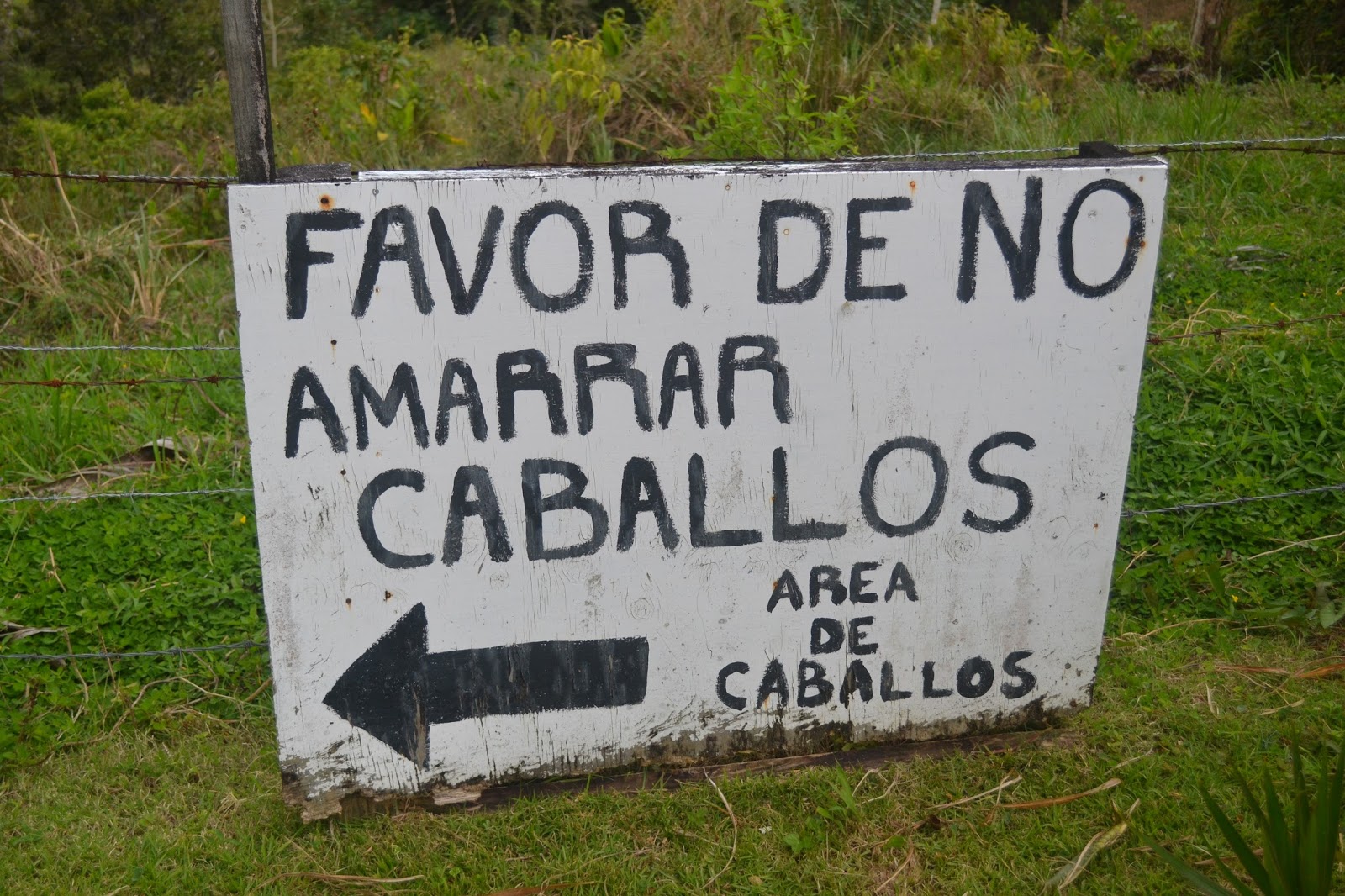
"Please do not tie your horses" [Personal Photo]

View of the island [Personal Photo]

View of the island [Personal Photo]

I know there are some cousins around in Yabucoa and my next visit will probably be reaching out to them and visiting them to see the lands our family worked. For now, it was pretty amazing to just see the town itself and share that moment with my grandmother. I've been doing some traveling so some more Travel Tuesday posts will be coming your way! And maybe some Travel Thursday posts to not fall behind. 

Sunday, March 27, 2016

Searching La "Gaceta de Puerto Rico"

Now that I'm on Spring Break I'll try and write a few times and get back up to date on things since I am in Puerto Rico. One of the posts I've wanted to write is on the "Gazeta de Puerto Rico" and how I've recently looked more into using this resource to learn more about my ancestors.

Gaceta de Puerto Rico [Library of Congress]

The Gazeta de Puerto Rico (linked) ran from the mid-1800s to the early-1900s and at first ran only a few days a month and later began to run daily. On the Library of Congress' website you can search under state "Puerto Rico" and then enter a name into the search option. Looking at my family tree I decided to search various names one at a time to try and see if anything would pop up for my ancestors. There are possibilities that the person I found might not be my ancestors but seeing as how the dates, the names, and the towns match there are high possibilities that most of the hits I got in the Gazeta are ancestors of mine. I was able to find some possibly ancestors and then there were a few that were definitely ancestors, and it was interesting what I was able to find about them in the newspaper. Tip: Try different search options: with both surnames, one surname, different ancestors in your tree - anything that'll help bring up different results.

Posible Finds

There were a few people that I found that I'm not sure if they are my ancestors, for example I found a mention of a Bartolo Marrero and Estefanía Marrero, both ancestors from Corozal and my 4th and 5th great grandparents. One article written in 1852 mentions a "Bartolo Marrero" (liberto) in Toa Alta who was placed in jail for 30 days for an infraction of art. 176 of the "Banda de policia". Despite by 4th great grandfather being born in Corozal, his ancestors were from the town right over which was Toa Alta so very possible this is him in his 30s being placed in jail. I tried looking up article 176 but couldn't find what exactly it was. What's interesting here is that this Bartolo Marrero was listed as "free", so it makes me wonder if at one point his ancestors were slaves and/or because of his color they mentioned he is free to not be confused with those still enslaved. Not too sure!

Bartolo Marrero (Liberto) [Library of Congress]

The next year in 1853 there's a mention of "Estefanía Marrero" in Corozal, exactly where my 5th great grandmother lived (and the same name!), it mentions that Estefanía Marrero had to pay "2 pesos" for publicly insulting the wife of Francisco García, Sinforiana de los Santos, and equally Francisco García had to pay for his wife's insults made. The article however states that both were insolvente or insolvent/bankrupt and thus had to pay in jail. I wonder what they could have been arguing about in public strongly enough to have them have to pay a fee. The year was 1853 so probably a simple curse word from a woman could have made people flip out. I guess we'll never know what was said unless there is some actual case or paperwork that had to be filled.

Estefanía Marrero [Library of Congress]

Interestingly enough I was able to find a possible record that could or couldn't be my 4th great grandfather. In an article from the 22nd of December 1840 newspaper there's a list of entries and exits from Puerto Rico and one lists: "de Guadeloupe: balandra francesa San Jou, capitan Jean Charles, con 7 hombres y bacalao". It lists a capitan Jean Charles who leaves from Guadeloupe with 7 men and codfish on the yacht or "sloop" San Jou. It's interesting seeing as how my 4th great grandfather was from Guadeloupe and also dealt with ships. Seeing as how "Jean Charles" seems very common amongst French names I wouldn't exactly say this is my ancestor but it would interesting if he did trade in Puerto Rico, like it, and eventually decide to stay here. Always possible!

Capitan Jean Charles [Library of Congress]

Definite Finds

There were however some definite finds in the newspapers of some of my ancestors in Puerto Rico. One especially interesting find was of my 4th great grandparents from Martinique and Guadeloupe and the mention of their daughter. I can't quiet figure out what happened with the type of language used in the article but it seems that there was some kind of problem with injuries/wounds. The article was written in 1886 meaning that Jean Charles would be in his 60s, Julienne Malvina would be in her 40s and their daughter only 19 years old. Despite the article being something negative that happened it was nice to see a mention of my foreign ancestors and seeing their names which at this point was a mix of French and Spanish.

Juan Carlos Gustave, Balbina Loten, Paulina Gustave [Library of Congress]

Also, my "I'm-fairly-certain" 3rd great grandfather is mentioned various times throughout the history of the Gazeta. Damián Magraner Morell, a native of Sóller, Mallorca, lived in Lares for various years throughout the mid-1800s but eventually returned to Spain where he passed away. The latest mention was in the article on the 10th of March 1900 granting some sort of licenses but no idea for what. It says it was endorsed by Francisco Seir and Ramón Cueto approved in Lares. In 1902 there's quick mention that some land bought borders Damián's land in Río Prieto, Lares on the east of the property purchased. 

Damian Magraner [Library of Congress]

The earliest records by name appear only the 1890s dealing with from what I gather with some elections and his contribution to said election. I imagined there would be more mentions seeing as how his siblings and he owned an hacienda in Lares and land there. His brothers Nicolás and Cristóbal do appear in the Gazeta as well. I am always willing to find out more about these siblings and about their time in Puerto Rico. 

For anyone researching their ancestors in Puerto Rico I would recommend to search these newspapers seeing as how you never know what/how your ancestor will be mentioned in. Maybe they played some role in local politics in their town or got charged for a loose pig or cow (it did happen!). But having a small mention of an ancestor can help you narrow down years, towns they lived in, and certain aspects of their daily live. Go and check what you can find! 

Monday, January 18, 2016

Plotting Puerto Rican Property

Recently in a Yahoo post, a member from one of the genealogical groups I am a member of sent us a link with the ability to search for property your family held/currently holds. This link allows you to search the island for property and then plots it for you showing you the size of the property. Also, there is information such as name of owner and if it was recently purchased it shows you from who it was bought. It seems to be current property and there is no option to see if property was held in the past, so for example, if your family held land but has since sold it the property won't appear as belonging to your ancestors. The only thing I don't really like about the website is that it shows current addresses for people living on the island still. I confirmed this by searching for aunts, uncles, great-uncles, and great-aunts that still live in Puerto Rico; I guess that information is available somewhere on the internet already but I found it kind of creepy to have that information so easily readily available to whoever wanted to search and see it Google Earth-style.

Nonetheless, I think this website can be useful for people searching for property their family has owned and I was told that with the help of those "parcela" numbers you can search at your local Registro de Propiedad to find out more information about the land, such as who bought it and how it was passed down. I personally haven't done this but I hope to do so when I visit the island. I was fortunate to find some property my ancestor owned in Río Prieto, Lares, Puerto Rico. As you can see below, it is highlighted the property that was under his name, equally you can click on the adjacent property and see who neighbors are, sometimes their own siblings and/or cousins.

Land Property in Lares, Puerto Rico

If you click on the blue binocular on the bottom left hand corner there is a option called "dueño" where you can search for your family ancestors who might have held land. Play around with this because for example I searched for my 2nd great-grandfather without his maternal surname and he didn't show up, but when I searched for him with both he appeared. Equally, if you don't find an ancestor trying searching for their wife or the combined searched of them and their spouse to see if any children held the land. Also, there are other options where you can trace the land and mark it on the map and other interesting options. I haven't played around too much with the site and from my understanding it is fairly new so there is a lot to be learned still.

Hoping to keep digging and find some more property for my ancestors and hopefully when I'm Puerto Rico be able to learn about how and from who the land was acquired!