Showing posts with label Yabucoa. Show all posts

Monday, September 30, 2019

How One Death Record Got It Wrong

I wanted to focus this post on an aspect of genealogy I think most newbies tend to oversee, whether due to excitement or blindly trusting what we first see - mistakes on records. When you first start out in genealogy, you tend to take all information on records as genealogical gold. But what happens when a record is wrong? More often than not this is likely to occur (in certain types of documents over others) and there are probably more instances of this happening than we actually know of. These types of 'clerical mistakes', whether on purpose or mistake, are becoming easier to break down with the advent of DNA testing. Today, I wanted to focus on two records, a civil death record and a church death record, essentially the same, but with very different information on them and how one created a brick wall for me while the other broke it down.

One Death, Two Sets of Different Information [Ancestry & FamilySearch]

When I first began my genealogy 15 years ago, one of the easiest sides to research was my maternal grandmother's side of the family from Yabucoa, Puerto Rico. This side was the easiest since I am fortunate enough to have my maternal grandmother still alive. I could ask her questions about her parents, grandparents, cousins, etc. until the genealogical well of information ran dry. Since my grandmother was born in Yabucoa but raised in San Juan, she had limited knowledge past her great grandmother "Pancha", Francisca Orozco Santiago, who passed away two years before my grandmother was born. Fortunately for me, the Puerto Rican Civil Registry records were available on FamilySearch and I was able to pick up on where my grandmother's information left off.

Working my way backwards from my 2nd great-grandmother, I began searching in the Yabucoa civil records. From what I have on my tree, it seems that back in 2011 I uploaded under Francisca's gallery the civil registry birth record for Francisca, which mentions her maternal grandparents as Manuel de Santiago, married, a farm worker, alive, and living in Calabazas, Yabucoa and Juana Balbina Burgos, also alive and residing in Calabazas - these were my 4th great-grandparents. Years later, the Puerto Rican Civil Registry would become available on Ancestry so I could now merge the records to my family members' profiles.

Manuel de Santiago & Juana Balbina Burgos (4th Great-grandparents) [Ancestry]

My grandmother had never known the names of her 2nd great-grandparents and excitedly wrote them down during our phone conversation years back, I told her I'd keep working on the tree to see what else I could find. In the same year of 2011, two months after uploading Francisca Orozco's birth record, I uploaded to my tree Manuel de Santiago's civil death record. This death record, left a lot to be desired and in the next 7 years to come I'd be stuck with no solids leads.

Manuel de Santiago, Defunción 1888 [Ancestry]

What's marked in green above was confirmed information I knew, the name of my 4th great-grandfather was Manuel de Santiago, he was living in Calabazas where he passed in 1888 (our extended family lived/lives in this part of Yabucoa to this day), he was married to Juana Burgos and had a daughter (my 3rd great-grandmother) named Dolores Santiago Burgos. On this record it states that he was the illegitimate son of a Petrona de Santiago who was already deceased. The person who came forward to make Manuel's death known was a Juan Gómez, who according to this record was in charge of the family. Currently in my tree there are two potential Juan Gómez who could be this man that came forward.

For years to come, my tree was stopped at Manuel de Santiago, son of Petrona de Santiago. Back in 2013-2014, I had spent some time visiting the LDS church in New York City to have access to Yabucoa's church records and my searches for Petrona's death, Manuel's baptism, or even his marriage to Juana Burgos were fruitless. When the church records for Yabucoa became available online on FamilySearch my searches went elsewhere in Yabucoa and to other towns now easily accessible. Last summer, however, I decided to locate Manuel's death record in Yabucoa's Parroquia Santos Ángeles Custodios' church records. Little did I know this record would make my brick wall come tumbling down. 

Manuel's death is recorded in the Civil Registry on the 19th March 1888 and mentions he had passed away one day before at 6 in the morning [18th March 1888] due to pneumonia. Having this date in hand, I began to search the Yabucoa church records for a death record for Manuel de Santiago. 

Manuel de Santiago, Defunción de iglesia 1888 [FamilySearch]

The first thing that shocked me was a second surname for Manuel listed as "Ramos". I initially thought, this can't be my Manuel, he doesn't have a second surname on his civil death record. But the closer I looked at the death record, I noticed that everything matched up - Manuel de Santiago, passing away the 18th of March 1888, married to Juana Burgos. Except this time it listed his parents as Claudio Santiago and Marcelina Ramos. My mind began to race, How could there be two different recorded parents on one death? Who then reported his death to the church? Here you can see there is no mention of who came forward to register his death at the church, but was there a way to figure out which record was correct? Of course! If I could located Manuel and Juana's marriage record, I could hopefully once and for all confirm who his parents were. Since he was alive for his wedding and most likely relying the information himself of who his parents were, this would help to confirm which of the two records were correct. So last summer, I spent a lot of time searching the Yabucoa church records painstakingly going through images one-by-one searching for more confirmation of Manuel's parents. And final, at one point early in the summer, I was able to locate their marriage record.

Manuel de Santiago & Juana Burgos, Matrimonio 1853 [FamilySearch]

Manuel de Santiago and Juana Burgos were married on the 17th of September 1853 (166 years ago this month!) and though hard to see on the record, playing around with the brightness you can make out his parents' names - Manuel de Santiago, vecino de Las Piedras, hijo legítimo de Claudio y de Marcelina Ramos. Though I'm not 100% sure it says "Las Piedras", based off the script/handwriting, knowing that it doesn't say "de esta feligresía" (parishioner of this town) like his wife, and that his father was born in Las Piedras himself, I'm fairly sure that it's Las Piedras. 

Here we now had another record to confirm his church death record's parents' names - Claudio Santiago & Marcelina Ramos (my 5th great-grandparents). By finding both his church death record and his marriage record, I was able to find out the names of my 5th great-grandparents and continue to research these lines. Last summer I was able to discover that before arriving to Yabucoa, my family had lived in Las Piedras and Humacao as well as the names of Manuel's 4 grandparents and 4 out of 8 of his great-grandparents - these being my 6th and 7th great-grandparents. I was pretty excited about this new information as it brought some of these branches back to the early 1700s. 

This past July 2019, before heading out to travel for the summer, I was searching the early 1800s baptism records in Yabucoa. Luckily for me, I was able to find Manuel de Santiago Ramos' baptism record! 

Manuel de Santiago Ramos, Bautismo 1822 [FamilySearch]

Baptized on the 1st of July 1822 (I found this record 197 years and 3 days after he would have been baptized!) and born on 19th of June 1822, Manuel was the legitimate son of Claudio de Santiago and Martina Ramos (though listed here as "Martina", I'm confident this was supposed to be recorded as Marcelina). It mentions that his godparents are Juan de Santiago and Luisa Ortis [sic], and based of a baptism I found in Las Piedras for Claudio, these would be his paternal grandparents, my 6th great-grandparents. 

Had I not looked into the Yabucoa church death records it would have probably taken me some more time to realize there was a mistake on his civil death record. Finding this "second" death record allowed me to find his marriage record and ultimately his baptism record. Though I was stuck for about eight years, finding this one church record allowed me to research and find three more generations in the span of one year. This is why it's important to cover of all of your bases when searching for an ancestor and use multiple records to corroborate your findings. Hopefully this post can serve as an inspiration to those of you stuck searching for an ancestor! Keep trying, looking in new places, and using multiple records and sources to aide your search. 

Related to Manuel de Santiago & Juana Burgos? 

Reach out to see where and how much DNA we might share!

Wednesday, May 8, 2019

A Puerto Rican Look at: My X-Chromosome

With Mother's day being this Sunday here in the United States, I decided to take a different and closer look at my DNA - I wanted to see how my X-Chromosome and those of my grandmother, grandfather, and great-grandfather were passed down; all exclusively inherited from my maternal side of the family. Since I am fortunate to have these members tested on 23andMe, I can visually see how this inheritance how trickled down via 4 generations. 

X-Chromosome Inheritance [Personal Photo]

Above you can see how I get my X-DNA through various generations and ultimately down to me. Having used DNAPainter (I've posted about it before) to trace my matches I have been able to trace which segments belong to which ancestors along potential my X-chromosome inheritance ancestors. It is important to note that as a male I have one X-chromosome inherited from my mother BUT from various ancestors including my BOTH maternal grandparents, both great-grandmothers, one great-grandfather, etc. This is demonstrated below:

X-DNA Male Inheritance [The Genetic Genealogist]


This would mean that by understanding which pieces of DNA came from which sets of ancestors I could have a better idea of part of their cultural inheritance passed down to me via my X-chromosome.

My X-Chromosome Inheritance [Personal Photo]

You can see above that mainly my maternal grandmother's DNA is the one I carry while my maternal grandfather's DNA "bookends" my grandmother's genes. Looking at my ancestors that have contributed to my X-Chromosome, I can start to unravel a bit of a story for my ancestors. It's also important to note that various siblings can inherit in similar but different patterns a X-chromosome, so while I may have a smaller amount of my grandfather's DNA my brother's may have inherited different segment start and end points along their X-Chromosome.

Genetic Breakdown


North African & Arabian; Broadly European
These two pieces of DNA here were inherited from my maternal grandfather's ancestors. I'm not sure from which specific ancestors these are from yet but these ancestors were from the areas of Toa Alta and Barranquitas/Morovis in Puerto Rico. The Toa Alta side includes surnames such as Santos and Chéverez while the Barranquitas/Morovis side includes Rivera and Rodríguez - these are the surnames from 7 generations back of my 4th great-grandparents.


Native American
The first Native American chunk seems to come from my maternal grandmother while the second Native American piece of DNA is from my maternal grandfather. Interestingly on the first native segment I have two matches from my dad's side of the family that match me on my X-chromosome. This would mean that somewhere along my 2nd-great-grandmother's line there is a shared ancestor that comes from my great-grandfather, to my grandmother, and to me who is tied to my paternal Rivera side. 


Surnames on the first Native DNA segment include Arvelo, Flores, Sánchez, Vera and were from the area of Quebradillas and San Sebastián in the 1700-1800s. The second DNA segment include the same ancestors from the previous "North African & Arabian; Broadly Europeanwhich where ancestors from the areas of Toa Alta and Barranquitas/Morovis. The Toa Alta side includes surnames such as Santos and Chéverez while the Barranquitas/Morovis side includes Rivera and Rodríguez.


Broadly Southern European; Spanish & Portuguese
This whole blue segment basically comes from my grandmother. The beginning broadly Southern European segment I think is tied to my great-grandfather while the Spanish & Portuguese I think is tied to my great-grandmother. Deducing that, that would mean that the Spanish and Portuguese DNA is mainly from my Maunabo and Yabucoa side of the family. Surnames on this side of the family include Burgos, Dávila, Orozco, Ramos, Ruiz, and Santiago. These family branches have been in this area for hundreds of years with some lines stretching back to Las Piedras and Humacao back in the 1700s. It be interesting to try and see if I can find more matches to try and parse down genealogically which of these Spanish & Portuguese segments are attributed to whom. Having recently discovered my Dávila line from Spain it would interested in seeing which of these segments could potentially come from that family. Also, these ancestors were mixed between identifying as "white" and "pardo" so it's interesting that such a big chunk is specific to Europe - it makes me wonder if it's specifically from a certain set of white ancestors. 

Conclusion

Studying my X-Chromosome has only given me a look into certain ancestors along my family tree. The more matches I have on my X, the better I will be at trying to triangulate which ancestors contributed to those segments and understanding their mixes. Of course, autosomal DNA and matching on other non-X-chromosomes is helpful as well but it's interesting to see that certain ancestors carried for example North African DNA to Puerto Rico and potentially those ancestors also contributed North African DNA to other chromosomes in my DNA as well. It's also amazing to see how the colors showcase the diversity of my family as well.

Wednesday, July 18, 2018

A Family's Move Through Paper Trail

Recently, I've been taking a dive into the Puerto Rican Church Records again on FamilySearch. By chance and funny enough, by looking to one branch of my family I bumped into a completely different one. Finding children being born in towns nearby (and not so nearby) and parents appearing as godparents has allowed me to track my family's movement across the island. This is pretty important in genealogy since movement from town to town means that there might be other branches to your tree that stayed behind and distant cousins are probably there. This could also mean that your ancestors might have been married before arriving to the town you knew they were from and if there is no death record in the town they resided most of their lives, they might have moved back or moved over to a neighboring town where another of their children lived.

This post will be about one specific couple who I have been able to trace through documents moving across the island. The couple's names is: Bartolomé Dávila & María Cándida Rodríguez. They are my 5th great-grandparents on my maternal side of the family.


Bartolomé Dávila & Cándida Rodríguez

From the information I have so far I know that Bartolomé Dávila (sometimes written as Dávila Cantos) and his wife María Cándida Rodríguez were born in the mid 1700s based of the baptism dates of their children. Originally when I discovered this pair, I knew that they had lived in Maunabo where part of my maternal ancestors had lived. My 2nd great-grandfather Pedro Dávila Ruiz was either born in Yabucoa or Maunabo but for sure his parents and grandparents lived their lives in Maunabo.

It wasn't until recently that I was searching the town of Coamo for my Correa families that I surprisingly bumped into Bartolomé and Cándida. At first I was confused because I knew they lived in Maunabo, but seeing the surname Dávila Cantos and seeing as how they weren't having children in Maunabo at that time, I am pretty sure that these are my ancestors living in Coamo before moving into Maunabo. Now, there is always the possibility that this is just a coincidence. That there was another pair with the same names living in Coamo but given the time frame (early 1800s) and the set of names, I'm fairly certain there's are my ancestors. The lack of births in the those years in Maunabo also help to build the case that they are one and the same instead of two separate pairs.

Here are the children and the towns they were born in that I have so far for Bartolomé Dávila and Cándida Rodríguez:

  • Luciana Dávila Rodríguez (1808) - Coamo 
  • Juan Estanislao Dávila Rodríguez (1809) - Coamo 
  • Rafael Dávila Rodríguez (1810) - Coamo 
  • José Laureano Dávila Rodríguez (1814) - Maunabo 
  • Juliana Dávila Rodríguez (1816) - Maunabo 
  • José Manuel Dávila Rodríguez (1818) - Maunabo 
  • María Feliciana Dávila Rodríguez (1820) - Maunabo 
  • Francisca Dávila Rodríguez (1821) - Maunbo 
  • Manuel Dávila Rodríguez (1826) - Maunabo 

I wonder if the gap between 1821-1826 means that the family temporarily moved somewhere else and then returned to Maunabo seeing as how they were having children every 1-2 years. 

Tracking Movement
Here's a map showing the years they were living in the respective towns. Notice that Coamo isn't "right next door" like how the other two towns are. I wonder what made the family move from Coamo into Maunabo and where their origins are, hopefully by digging a bit more into the Coamo church records I will able to trace the Dávila Cantos surname and learn more about their origins.

Moving around the island - Coamo, Maunabo, and Patillas [Google Maps]

As you can see, they were in Coamo around 1808-1810 living there by proof of their children's baptism records which I'll paste some of them down below. The family then moves into Maunabo around the 1811-1813 because by 1814 they are baptizing children there. Notice also that in 1819 the couple appears in Patillas, here they are appearing as godparents. Since Patillas and Maunabo are neighoring towns it is very possible that they just jumped over into Patillas to serve as godparents for a family they knew but continued their residence in Maunabo. Their last child I have is born in 1826 in Maunabo, from there I don't know what happened to them. Since Maunabo's death records aren't uploaded to FamilySearch I'm not sure if they died there or in another town. My guess is that they stayed in Maunabo, but at this rate as you can see it isn't a given that they died where they lived.

Documentation

As you can see below the first baptism was in 1808 of their daughter Luciana Dávila Rodríguez, interestingly enough the father's surnames are listed as "Cantos Dávila" and the godparents are Bernardino Ramos & Marcelina Cantos Dávila. I imagine that Marcelina is a potential sister to Bartolomé and I have to continue my searches in Coamo for this family to see what else I can find. Potentially, there are other branches here left that did not move into Maunabo.

Luciana Dávila Rodríguez, Año 1808, Folio 190 [FamilySearch] 

Here you can see (barely) that Bartolomé Dávila and María Cándida Rodríguez are serving as godparents in Patillas to Juana Feliciana Rodríguez, the natural daughter of María Rodríguez. Could María and Cándida be sisters?

Juana Feliciana Rodríguez, Año 1819, Folio 155 [FamilySearch]

Lastily, the record below is of a final baptism from Manuel Dávila Rodríguez born in Maunabo in 1826. The godparents are Don José Ortiz and Lorenza Rivera, no known relationship yet to my ancestors but possibly a family they were very close with in Maunabo. 

Manuel Dávila Rodríguez, Año 1826, Nº 568, Folio 80 [FamilySearch]

By the time Manuel was born the parents were probably in their early 40s which I would imagine that Manuel would have been one of their last children. If I remember correctly, I could not find any other children being born in Maunabo passed 1826 for the couple.

Conclusion

As you can see, the family made a big jump from Coamo to Maunabo. Nowadays, this probably isn't much but I can imagine in those times that move across various towns wasn't easy. The gap of 1811-1813 is probably when they moved and I wonder if any children were born along the way in one of the towns along the route, the only way to know is to check any available church records for those towns. I also have to check the Coamo records for any possible siblings or ties to the Dávila Cantos and Rodríguez family. I haven't come across "Cantos" really in my searches so I'm interested in seeing where they were from.

So lesson learned! Check neighboring towns and having an idea of the town's founding and history which will hopefully give you a better understanding to your family's past and history there! If you can't find records for your family, check towns in the surrounding area and always keep your eyes open for your ancestors as they might pop up anywhere (within reason)!

Wednesday, July 13, 2016

A Puerto Rican Look at: Colorized Pedigrees!

I've been seeing these style of pedigrees online for a while now and decided I should give it a go! Thanks to Zalewski Family Genealogy blog  I was able to use the template and create my very own pedigree. Because my family has been on the island of Puerto Rico for over 200+ years, I didn't think it would have made sense to create a chart with just the same color over and over again to represent Puerto Rico. With this template I was able to include up to my 3rd great grandparents, which are 32 different ancestors! I was able to include their surnames on the side as well, giving you an idea where my family surnames originate from on the island. It was interesting seeing how diverse my family tree is in terms of locations. If you notice, it was only recently that my family came to the capital of San Juan with 3/4 of my grandparents being born there, though all of them spent their formative years growing up and living there. If you take a further look, my family has been present on the island for those 200+ years in almost all my branches, there is only one ancestor that made the cut for being from another place and that's my 3rd great grandfather from Mallorca, Spain.

I definitely had a lot of fun doing this pedigree and there are so many other styles you could do as well! Though morbid, I'm thinking of creating a pedigree with family deaths to see if there are any recurring patterns and to have an idea of what is potentially passed down in my family. You could also even create a pedigree with signatures of your ancestors! Though I would love to create one, unfortunately most of my ancestors didn't know how to write since they were all farmers and barely attended school past what we know as elementary/middle school.

Colorized Pedigree [Personal Photo]

I'm not sure how common it is to move so much to different cities but if you notice my mother's side of the family, they were notorious for making moves across the island. My father's side on the other hand seems to stick more to certain towns. For example, we have been in the towns of Corozal, Lares, and Toa Alta for many many years on my dad's side of the family. To give you an idea, here's a list of all my family locations which include 20 different locations on the island, those being: 
  • Adjuntas, Puerto Rico
  • Barranquitas, Puerto Rico
  • Corozal, Puerto Rico
  • Jayuya, Puerto Rico
  • Lares, Puerto Rico
  • Maunabo, Puerto Rico
  • Manatí, Puerto Rico
  • Morovis, Puerto Rico
  • Patillas, Puerto Rico
  • Quebradillas, Puerto Rico
  • Salinas, Puerto Rico
  • San Juan, Puerto Rico
  • San Sebastián, Puerto Rico
  • Toa Alta, Puerto Rico
  • Utuado, Puerto Rico
  • Vega Baja, Puerto Rico
  • Vieques, Puerto Rico
  • Yabucoa, Puerto Rico
  • Yauco, Puerto Rico
  • Mallorca, Spain
I recommend any genealogist who enjoys working with their tree to give this a go. It was super easy to create and could make a very cool poster for a wall! You could even include names and dates to give it more importance as well! 

Monday, July 11, 2016

Searching el "Registro de la Propiedad"

While in Puerto Rico during my spring break, one of the main things I wanted to do was go to a Registo de la Propiedad. I had heard a lot about them and how they could provide certain information that census records and church records didn't. So I knew that this was a place I wanted to visit since according to census records various ancestors in my family had owned land. I mainly wanted to see if I could find land records for my Avilés family in Lares (equally searching for the Magraner side as well) and Benito Orozco and the land he owned in Yabucoa according to the census.

I'll go over my process of getting to the Registros and what I was able to find out about my family along the way!

Getting Started

First, I began by looking up all the information and jotting it down for the necessary ancestor. In particular I was searching for José Avilés and Benito Orozco, both illegitimate children so that was something to keep in mind. I jotted down what barrios they lived in, their birth and death records, and the list of their children. I did this because I wanted to make sure I had everything necessary readily available for when I went to do searching. Since I'm fairly young, I wanted them to see that I was serious about my searching as well.

I chose these two ancestors for a reason: since José Avilés and Benito Orozco are illegitimate children, I wanted to learn more about them. How did they acquire their land? Was it through their parent or through handwork? Would it mention a father's name or something new that I previously not known? With José Avilés I'm fairly certain his father is Damián Magraner as I had mentioned in other posts and thoroughly searched finding pretty good evidence. Benito on the other hand had no father mentioned on any of his records, we know that Benito used the surname "Santana" later in life, but we aren't sure who his father was.

Preliminary Checks

Before heading out I checked where exactly these records would be held. Since Puerto Rico has many municipalities, each are clumped together into bigger regions. This isn't only true for Registro de la Propiedad records but it's also true for church records as well. Lares for example falls under the "Utuado" Registro while Yabucoa falls under the "Humacao" Registro. If you don't know where each town may fall, like how I didn't, check out this link to the Departamento de Justicia or here to see where you would need to go.

After that I made sure to call each place beforehand, not only to make sure they would let me go and look for records but to see that they were actually open. Since my first week in Puerto Rico was during Semana Santa (Holy Week) I knew that some places would be closed and would have to go the second week. So make sure to check and call before heading over. My first call was to the Humacao register and the lady there was very nice explaining what I needed to do. She asked if I knew the numbers for the plots of each land (número de finca), and since I didn't she said I would have to search for my ancestor through the actual tomes of indexes. I didn't have a problem with that since I had done it a million times already for the church and civil registry books, and so I was ready for what was in store. She told me that even though the actual books are in their offices, the Registro de la Propiedad has moved online and so with the numbers I could search the online database for my ancestors. Calling Utuado was easy since I already had known what I needed and what I needed to do. Do not get deterred from going and searching!! From my understanding the records are available to be searched by the public, all you need to do is go in and search!

Also, before heading out make sure to map out where the place is. A lot of places in Puerto Rico don't necessarily match the GPS or can't be found. So even though the Registro wasn't showing up I would look at the nearby landmarks to see how to find them. That way when I was close enough because I had noticed the supermarket, gas station, etc. that I had seen on Google Maps, I would ask someone where I could find the register. In both cases I was just one turn and one street away from the location and people were nice enough to point me the right way. So don't feel nervous about getting lost either if you've done your work beforehand!

Searching

This was the bulk of my time at the registers, I was searching the gigantic books for mentions of my ancestors and trying to see if I could find some sort of mention of land being sold or bought by Benito Orozco, I searched under "O" and "S" for Orozco and Santana respectively in Humacao. In Humacao, I had found some cousins who had bought and sold land, cousins of Benito's children and grandchildren but I was unable to find a mention of Benito himself. I decided to ask the lady how this could be possible, I knew that my ancestor owned land but why wasn't he showing up? She responded that though many people owned land, some of it was bought, sold, and passed on to children without the registry being informed (before I think it was actually required). So even though Benito could have owned land, he could have left it to his children without leaving anything written with the Registro. This made sense, seeing as how I couldn't find my other ancestor Pedro Dávila Ruiz who also owned land in the south of Puerto Rico. It is also possible that I could have missed his name in the registry books but I have pretty good eyes when it comes to searching names, so I don't think I missed him. Though a bit bummed I was still looking forward to the registro in Utuado!

Registo de la Propiedad [Personal Photo]
Sección de Humacao [Personal Photo]

Next in Utuado I checked for José Avilés and any mention of Damián Magraner, though Damián owned land during the time of Spain's rule, I wanted to see if maybe there was a mention of him. When I arrived to the registro in Utuado I was told that I was welcome to search the indexes but that the internet was down and therefore I wouldn't be able to use the computers until they had the restored internet service. I thought this was a bit of an ironic situation seeing as how their walls are LINED with all the books that I would potentially need to check, all of the information online was readily available in person. But seeing as how all the documents were digitalized, they wanted people searching online and not in person -- bummer! So I got to work searching the books, in both cases I was luckily to have my grandmother with me who would initially scan over some books with me searching for names. Searching the indexes my heart jumped as I came across the name José Avilés Magraner -- my 2nd great grandfather! I jotted down the número de finca and all the information next to his name. I continued to search all the books just in case anything else came up, I was able to find two mentions of my 2nd great grandfather. Towards the end of my search I was bummed that the internet hadn't come back on but as I closed the last book, I heard the only other man there say "¡Llegó el Internet!" The internet was back! I was elated that I would actually get to search for José and his plot of land!

In Utuado! [Personal Photo]
Registro de la Propiedad - Sección Utuado [Personal Photo]

Some results

With the number at hand I got the lady to help me log on to their website (known as "Karibe") and I searched under Utuado to see if I could find José Avilés. Lo and behold the number took me to his record of land. Quick side note: The website is technically able to be used from home once you register yourself but I have yet gotten it to work, if someone has gotten in, let me know!

I was able to learn that my ancestor José Avilés Magraner purchased the land from a José Rodríguez Santiago married to Matilde Torres Vélez, both from Lares which means that José didn't receive land from his father but bought it himself. It doesn't seem that José Rodríguez and Matilde were neighbors with my ancestors and who knows if they knew this family somehow before purchasing their land. It seems that José bought that land for 760 dollars in 1924. Interestingly enough, the amount of land and when he purchased it coincides with the 1935 Agricultural Census! Also, José is mentioned as "Avilés Magraner" again on this record, helping further demonstrate that his father was indeed a Magraner.

I was also able to find the record for my ancestor leaving the land to his children! I somehow can't dig it up on my computer at the moment but the record mentions all of his children from his different marriages, where they were at the moment this was being written up, and how much land he gave each of them. My great grandmother had inherited land and when it was turn for my grandmother to get a piece she decided to sell her share since she wasn't interested in living in Lares and using that land. Though we don't currently own land ourselves there, many of our Avilés cousins still live and work the lands in Río Prieto, Lares. I was fortunately enough to visit the town of Lares but not the barrio of Río Prieto -- definitely next time around!

Conclusion

I'll make this brief! If you're interesting in searching for land records, make sure you have all the necessary information readily available, you call ahead of time to see if they are open, be ready to search index books for your ancestor(s), and have patience along the way. Even though I didn't find exactly what I was looking for, I was happy to find a mention of my ancestor nonetheless! Hopefully you'll be able to find something too! Happy searching! 

Tuesday, March 29, 2016

Travel Tuesday- Yabucoa, Puerto Rico

Since I am in Puerto Rico for Spring Break I decided to rent a car and live out my long genealogical dream of traveling around the island to see the towns my family are from. Now, I didn't and won't get to visit every single town or barrio on this trip but just being in the actual town was an amazing first step. Having a car has been such a blessing on this trip and hopefully on another trip I'll be able to rent again and travel some more around the island. Today, I'll talk about my visit to Yabucoa - La ciudad del azúcar. 

Yabucoa, Puerto Rico [GozateaPR]
My grandmother was born in Yabucoa but a few short years later her parents decided to move to San Juan to find work since Yabucoa was (still is?) a fairly rural town. Her family has lived in Yabucoa for many years dating back to the early 1800s, and mainly lived in the barrio of Calabazas but other cousins have moved into the barrios of Guayabota, Playa, and I think even to Aguacate. Our family there has worked on sugar cane fields/farms and worked their own land to grow food for their families. My grandmother says that neighbors would share food with each other such as a pig since sometimes a whole family couldn't finish it and instead of it going to waste they would bring some over to their neighbors.

Getting to Yabucoa was fairly easy with the help of a GPS! The roads are windy in certain parts but nothing too treacherous I would say, I've only been driving for 6 months so if I can do it, you can too! There are some very small roads that barely fit two cars but luckily I had no problems along the way. The drive was very beautiful and weather-wise we were very lucky, I even stopped a few times along the road to get some shots. Here's one below!

Driving to Yabucoa! [Personal Photo]

Our first stop in the town was the church since it was in the actual 'pueblo' itself. The earliest record I have of my ancestors is in the year 1876 when Benito Orozco and his wife Dolores de Santiago Burgos married in this church, so it was pretty cool seeing the church and being able to walk inside.

Iglesia Santos Ángeles Custodios [Personal Photo] 

Santos Ángeles Custodios [Personal Photo]

Prepping for Semana Santa [Personal Photo]

After, we took a trolley to get around the center but we really didn't see much so we decided to head over to Calabazas. It was pretty cool being in Calabazas and seeing how green it was compared to San Juan. There were parts where you could overlook the town and look down even seeing the coast, my grandmother says she remembers that her father mentioned them living high up in Calabazas. 

Welcome to Barrio Calabazas [Personal Photo]

View from Yabucoa down to the coast! [Personal Photo]

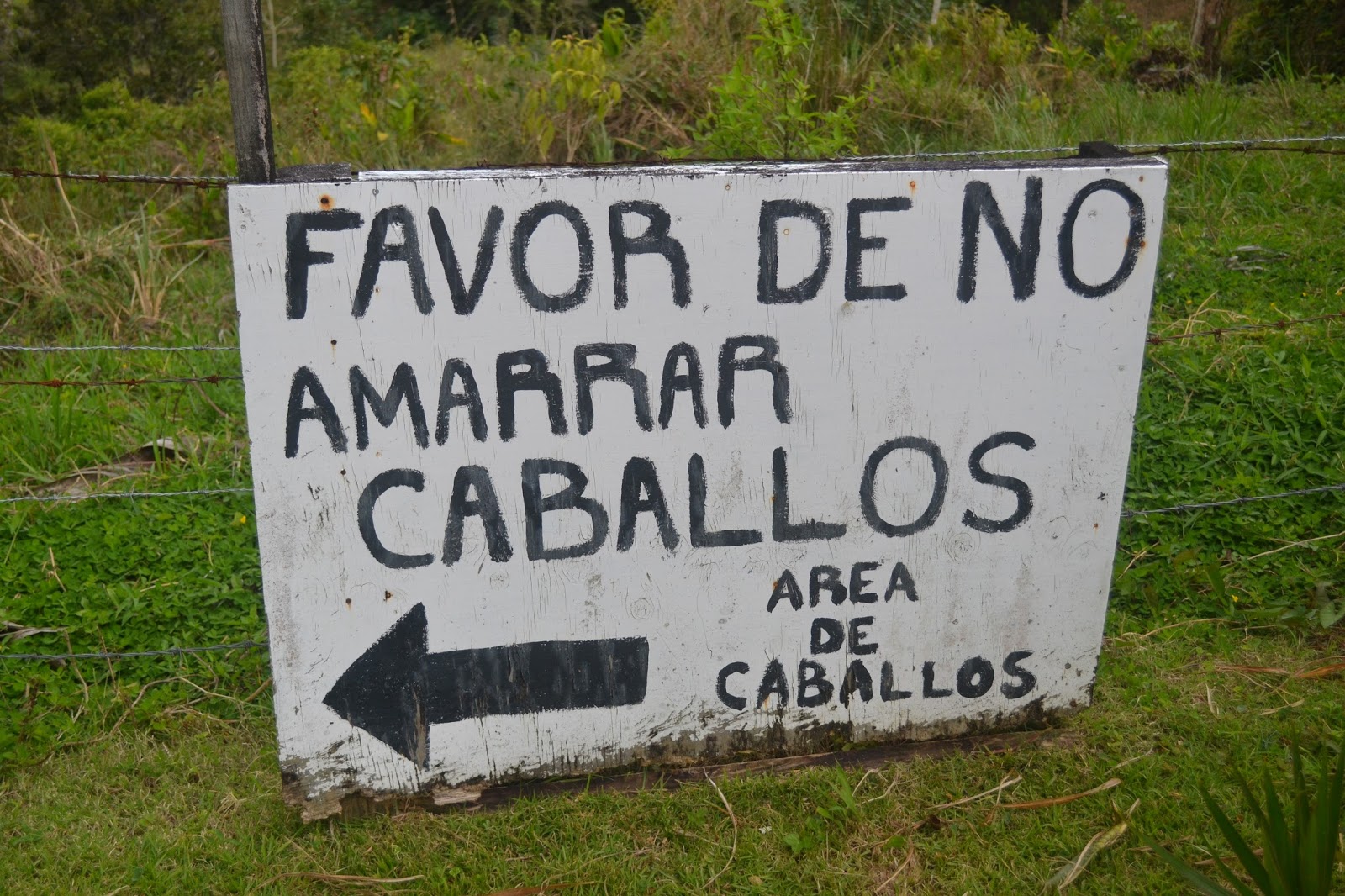
"Please do not tie your horses" [Personal Photo]

View of the island [Personal Photo]

View of the island [Personal Photo]

I know there are some cousins around in Yabucoa and my next visit will probably be reaching out to them and visiting them to see the lands our family worked. For now, it was pretty amazing to just see the town itself and share that moment with my grandmother. I've been doing some traveling so some more Travel Tuesday posts will be coming your way! And maybe some Travel Thursday posts to not fall behind. 

Friday, June 5, 2015

52 Ancestors – #51 Juana Burgos Vásquez (1839-1899)

So FINALLY getting around to finishing up the last two posts of the 52 Ancestry Challenge -- better late than never right!? This post will be about my 4th great grandmother, Juana Burgos Vásquez.

Juana Burgos Vásquez was from the town of Yabucoa, Puerto Rico in the southern part of Puerto Rico.  My family has been in this town for a good number of years and only recently in about the 1950s migrated out and into the San Juan area to look for better opportunities. However, there are still distant cousins that live down in Yabucoa and still own some of the land our ancestors worked on back in the 1800s, which is pretty awesome!

Yabucoa, Puerto Rico [Google]

Juana Burgos, according to the death certificate I found, died on the 14th of April of 1899 in Yabucoa, Puerto Rico. She was a bit of a hard ancestress to track down because records only listed her as "Juana Burgos" and never mentioned a second surname which is important in Puerto Rico especially when there are people with such common names. What I ended up doing was going through the index death records for the town and searched for all the Juana Burgos mentioned on the index and one by one searched them up to see if they could match my 4th great grandmother. Some were too old, some not married, and some too young, but finally I found one in 1899 that could match my 4th great grandmother's years and martial status.

By the year 1899, Juana Burgos would have been 11 years widowed from her husband, Manuel de Santiago. Since it seems that Juana and Manuel only had one daughter, my 3rd great grandmother Dolores, Juan Ortiz Lebrón (probably a neighbor) appeared to announce her death. He was aware of her parents, Eusebio Burgos and Monserrate Vásquez but probably not of Dolores, who already in 1899 was off taking care of her 8 children with her husband Benito Orozco. It is always possible that this death certificate isn't the correct one for my Juana Burgos but with the information I have and knowing that Juana lived in Yabucoa, the odds are high that this is my 4th great grandmother.

There is no mention of race in her death certificate, but through my MtDNA we know that Juana was a carrier of the C1b4 who she passed to Francisca Orozco Santiago (2nd great grandmother), and eventually to my grandmother, mother, and me. I'm guessing based off the future descriptions of her children and grandchildren, that Juana, like them, was of a mixed race background.

Some documents state that Juana's parents were from Las Piedras, which is a town just north of Yabucoa. Even though my ancestors lived in Calabazas (a town bordering Maunabo), you can see that Las Piedras isn't too far off for them to have traveled from. They could have easily made their way down through Jácanas or Tejas and Limones until they reached Calabazas, and stayed for whatever reason.

Yabucoa's Barrios [Google]

I'm hoping to one day head down to Yabucoa, see the town of Calabazas, and hopefully meet some of my cousins who still live there! 

Thursday, December 11, 2014

52 Ancestors – #46 Francisca Orozco Santiago (1885-1945)

Ok, not fun being behind but hopefully I'll be able to catch up and get these posts down before the year is over and my holidays start! Here is my 46th post about my 2nd great grandmother Francisca Orozco Santiago. When I first had started my research on my maternal side of the family, I had heard about her from my own grandmother but being that she passed away before my grandmother got a chance to meet her, I didn't have too much information on her. Luckily, with census records and the Civil Registry of Puerto Rico I was able to learn some more information on her and her life in Yabucoa.

Yabucoa, Puerto Rico [Wikipedia] 

My 2nd great grandmother was born in the barrio and town of Calabazas, Yabucoa, Puerto Rico on the 17th of October 1885. On her birth record she was registered with the surnames "Orozco Santiago" while some of her siblings were registered with a slight variation of the surname. Seems there was a bit of confusion with the order of the surnames as well as which ones to use. Francisca's parents were Benito Orozco and Dolores Santiago Burgos, and occasionally her father would appear as Benito Santana. My theory is that since Benito appears with only one surname, "Orozco", then Santana is probably his father's surname. However, records don't show any father for Benito and we can't know for such until we have some more proof and information about either his father or mother.

Yabucoa's Flag [CRWFlags]

Later Francisca would appear in 1909 marrying her husband Pedro Dávila Ruiz in Maunabo, Puerto Rico; his family's town of origin. One year later in 1910, she would appear living with her own parents back in Yabucoa along with her husband. This document would later help a cousin and I prove our relationship through the Orozco line in our families. It is also interesting to note that most of the time her and her family would appear as mulato or trigueño to describe their race.

From some reason, I can't seem to find the family in 1920 but in 1930, 1935 and 1940 the family still lives in Calabazas, Yabucoa, Puerto Rico. Pedro and Francisco would have seven children in total: Modesto, Epifania, Josefina, Juan, Dominga, Juan, and Eulalia. It was this generation that would start to move out of Yabucoa and even Puerto Rico to find a better life for their families.

Francisca would also pass away in Yabucoa, Puerto Rico in the year 1945. Unfortunately from my knowledge there aren't any pictures of Francisca being that in that year cameras still weren't that popular, especially in the rural areas of Puerto Rico. Being that I have pictures for some of her children I can imagine that Francisca was a mulata colored woman probably leaning more towards Taíno looks. Francisca is my maternal ancestress that carries the C1b4 native line so she comes from a long line of native woman (either Taíno, Arawak, or other).

The library of congress has a series of photos mostly taken by Jack Delano and most of them were taken around 1942 during a sugar mill strike happening in Yabucoa. It's so interesting to see the pictures and imagine my family's life then and potentially knowing some of these people in the picture. Here are some of the pictures from Yabucoa. My great grandmother Francisca would have been in her late 50s and the children in their 20s-30s around this time.

Houses in Yabucoa, PR [LOC]

Family from Yabucoa, PR [LOC]

Homes in Yabucoa, PR [LOC]

Men from Yabucoa, PR [LOC]

Friday, October 3, 2014

52 Ancestors – #39 María Higinia Ruiz Ramos (1859-1921)

Moving a little over towards the East from Patillas, we get to Yabucoa where my next ancestor entry will take place! This post is about my 3rd great grandmother María Higinia Ruiz Ramos.

María Higinia according to records was originally from Maunabo, Puerto Rico which makes sense since these two towns (Yabucoa and Maunabo) are very close to one another in the south-eastern part of Puerto Rico. Equally, her husband was also from Maunabo, PR. María Higinia would have been born around 1859, the daughter of Manuel Ruiz and Dorotea Ramos. Around 1875, Juan Bautista Dávila González and María Higinia Ruiz Ramos would have gotten married in Maunabo, Puerto Rico. Their marriage would produce ten children, which includes my 2nd great grandfather Pedro Dávila Ruiz.

By 1910, Higinia and the family were living in Calabazas, Yabucoa, Puerto Rico- the place where at least three generations of my family would be born/live in. María Higinia appear as 'white', married for 35 years and a owner of land on which she worked on. I'm not sure if this was an error on the part of the census taker since it's only María listed as the head but I wouldn't be surprised if she herself worked the land. She is listed as living with two children, and three grandchildren; she was also unable to read or write.

María Higinia Ruiz Ramos - 1910 Census [Ancestry]

Unfortunately, I haven't been able to locate most of my ancestors from Yabucoa on the 1920 census, this includes María Higinia. I'm not really sure why this is, they were living in Puerto Rico and never traveled outside the island, they even appear on the 1930 census living in the same town and barrio so it's not like they moved somewhere else. Nonetheless, there is a gap there missing of information on who was where and did what in the 1920 Census. 

I do know however that María Higinia Ruiz Ramos passed away on the 24th of September 1921 in Calabazas, Yabucoa, Puerto Rico. It took me a long time to find her death certificate. I had searched multiple times in Yabucoa and Maunabo but I had no idea when or where she died. Her husband on the other hand died in 1933 and was widowed by the time he passed away, so I had a short range of years for her... but still nothing! It wasn't until Ancestry uploaded the Civil Registry that I was able to type in names and play around with the settings that I was able to find a "María Ramos" passing away in Yabucoa. It turns out that this was my 3rd great-grandmother! For whatever reason, her first surname "Ruiz" was dropped on this document, but it does state she was the wife of Juan Bautista Dávila which helped to prove this was her. 

Her cause of death was kind of interesting/shocking to see. It states that at 10 in the morning of the 24th day of September of 1921, María Ramos asphyxiated (underwater). It doesn't, however, state if this was  on accident or on purpose. She would have been around 62 years old, so I can see this happening as a horrible accident but it doesn't state whether it was home or at a nearby river. I don't have anymore details than what is written on the death certificate and I haven't heard any stories of this as well in my family. I don't think my family even knew about this ancestress, let alone the cause of her death. 

María Higinia Ruiz Ramos - Defunción, 1921 [Ancestry] 

This is the third direct ancestor to die from something that was not of natural causes/ or a sickness. It's a bit morbid to find these death certificates and see sometimes the horrible ways someone passed away. For example: my 2nd great-grandfather, José Miranda Santos, who unfortunately hung himself at about the age of 50. It is however important to learn about the birth, lives, and deaths of each of my ancestors - the good, the bad, and the ugly. 

I have pretty deep roots in Maunabo, dating back to the early 1800s/late 1700s so I would love to head down there and see the area; as well as with Yabucoa which is one town over. I really need to head to Puerto Rico and discover these towns and barrios that my families were from… I'm seriously itching to do it in the near future!! Hopefully I'll collect more stories, see the lands they lived & worked on, and even meet some distant cousins!

Friday, August 22, 2014

52 Ancestors – #31 Dolores Santiago Burgos (1859-1929)

Today's post is about my 3rd great grandmother Dolores Santiago Burgos -- a lot of recent posts from my 3rd grandparents' generation!

Dolores Santiago Burgos was probably one of the first ancestors I found when I began researching my family. Because my grandmother knew the name of her parents and grandparents, this allowed me to easily search the census records for my ancestors on my maternal side of the family. I knew that my 2nd great grandmother Francisca Orozco was married to my 2nd great grandfather Pedro Dávila and they lived in Yabucoa, Puerto Rico (we knew however that Francisca died in the early 1940s because my grandmother never got the chance to meet her). I searched the census records for Yabucoa, specifically in the barrio of Calabazas, and found them in the 1910 census. Luckily my 2nd great grandmother was still living with her parents so this allowed me the chance to learn the names of my 3th great grandparents (Dolores being one of them). This 1910 census would later also become an important piece for making a connection to a cousin of mine who found me on ancestry.com.

1910 Census - Yabucoa, Puerto Rico [Ancestry]

With the help of the Puerto Rican Civil Registry on FamilySearch I was able to find Dolores' death record and also with the help of the microfilmed church records of Puerto Rico I was able to find Dolores' and her husband's (Benito Orozco) marriage record in 1876… which was pretty awesome to find!

Dolores in many of the records appears as either mulata or trigueña, I imagine that Dolores had some color to her! Dolores and Benito had eight children in totally and sadly I don't have any photos of any them, but I do have a photo of my great grandmother! From the research I have done, it seems that Dolores was an only child (which isn't too common in the 1800s in Puerto Rico). Many families had a number of children, anywhere from three to an upwards of ten, so for Dolores to be an only child is interesting and a bit strange to me. My spidey-sense tells me that there has to be more of them, but many there really aren't. None of the less, Dolores was the daughter of Manuel de Santiago and his wife Juana Burgos.

Dolores is also interesting to me because she is the carrier of my maternal haplogroup, C1b4 -- commonly referred to as a native haplogroup. Probably one of Dolores' distant ancestresses was a Taíno/Arawak woman who lived in the southern part of Puerto Rico and later mixed in with the people who came to populate the island. Many people think (and are taught) that the Taíno were wiped clean off the island of Borikén due to disease and slavery but the narrative is now changing with the help of DNA. It seems that over 65% of Puerto Ricans carry a native maternal haplogroup, which would mean that many assimilated into the changing culture rather than dying off. However, there aren't many male haplogroups (if any) on the island, which would mean that either the males were more likely to be killed or that the European paternal haplogroups overpowered in number and over time the native Taíno haplogroups began to disappear. I am proud to carry a piece of my history in my blood and to show that the natives are still with us, flowing through our veins and our culture.

Dolores passed away in 1929, already a widow of Benito Orozco. She was buried in Yabucoa, but unfortunately I don't think her grave would be around because she was most likely buried in the public town cemetery and the headstone (if there was any to begin with) is probably long gone by now. None the less, it would be nice walk through the barrio of Calabazas and visit the cemetery in Yabucoa to pay my respects to not only Dolores but also to my other ancestors who lived and were buried there. Without them, I wouldn't be here in the first place! 

Friday, April 25, 2014

52 Ancestors – #17 Bartolomé Dávila Cantos

It's probably only been just about a full year that I have known about my 5th great grandfather Bartolomé Dávila Cantos. Having returned to New York City from college I was able to visit the FamilySearch center more and got to use more microfilm rolls for the churches of Puerto Rico. One of the towns I really wanted to research was the town of Maunabo where I have maternal roots. I have written about Pedro Dávila Ruiz, my 2nd great grandfather and Bartolomé would be Pedro's great grandfather.

Maunabo, Puerto Rico - Coat of Arms [Google]

I've talked about Maunabo in previous posts - it's a town located on the southeastern coast of Puerto Rico and was founded in 1799. By switching to the Spanish Wikipedia page of Maunabo I was able to learn that the town's first residents were people of Guayama. The town also suffered badly from the hurricane San Ciriaco in 1899, destroying most of its stores and the town's sugar mill "La Bordaleza". Also, from 1902-1905 the town was annexed to Yabucoa due to a law enacted by the Legislative Assembly of Puerto Rico. 

Faro Punta Tuna - Maunabo, PR [Rainforestsafari]

I'm not sure if Bartolomé himself was from Guayama but he was most likely born circa the 1780s, which is a few years before the founding of Maunabo. Since I went only through the baptism records, I was only able to find the records of Bartolomé's children and grandchildren being baptized in the church . So far I have been able to find six children's baptism records with his wife María Candida Rodríguez: José Laureano, Juliana, José Manuel, María Feliciana, Francisca, and Manuel Dávila Rodríguez. I am a descendant of José Manuel Dávila Rodríguez who was born on the 19th of March 1818 and baptized the 30th of March. His godparents were Manuel Cintrón and Nicolasa Baerga.

I actually don't know when Bartolomé passed away either, it seems that no death records were indexed by the LDS church, and I hope that doesn't mean that Maunabo doesn't have them. Hopefully they never got the chance to index them and Maunabo has them safely tucked away in their church. 

I wonder what Bartolomé's background was, there is family lore that the Dávilas were a Spanish family but of course you always hear those stories in Puerto Rico with all your family lines. Using the little nifty last name tool I found last week it seems that the surname name Dávila can be found mostly towards the western side of Spain in Pontevedra, Badajoz, and the Canary Islands. These maps however aren't conclusive on where my lines are from, they just provide some ideas as to where the surnames are currently mostly found in Spain. 

Dávila Frequency Map in Spain [INEBase]

Currently trying to get a Dávila Y-DNA-carrying male cousin tested to see what haplogroup Bartolomé and the other Dávila men would belong to -- the adventure continues!