For most hispanic genealogist, at one point during our research, the question:
Do I have Sephardic Jewish ancestors? has come up! Not only across Spanish speaking countries in the Caribbean, Southern and Central America can Sephardic Jews be found but even on islands such as Jamaica, Curaçao, and as far as the old territories of the Ottoman Empire. Along with slave ancestors, these can be hard ancestors to find and each respectively have their difficulties. While slaves were not considered people and therefore many times do not appear by names on most records, Sephardic Jews who hid from the inquisition changed names, sometimes very frequently, and tried to evade shifting eyes from the "old Christians" in order to not cause too much alarm.
So I want to talk about the prospects of having Jewish ancestors and somethings to take into consideration while doing your research. I am in no way an expert when it comes to judaism, Sephardic Jewish migration, or anything of the likes. If not, I'm learning along the way as well!
 |
| Jewish presence in Spain [Google] |
Quick Historical Background
To write a historical background on the Sephardic Jews and their diaspora could take forever! And I say this because many people dedicate their lives to studying the Sephardic Jews, their customs, language, travel routes, and ways of life. So here's a quick background for those who might not know much about these kinds of Jews. So to start off: yes, there are various types of Jews! The main two are Ashkenazi (which are most of the Jewish people you might know with origins in Eastern European countries such as Germany, Poland, Ukraine all the way to Russia) and then there are the Sephardic Jews (which I'll explain in just a moment). There are also the Mizrahi Jews which can be found in Middle Eastern countries.
The Sephardic Jews are said to have lived in Spain since the second temple's destruction in Israel. Their name derives from "ספרד" (
Sepharad), the name given to Spain in Hebrew and therefore they are known are Sephardic Jews in English, sometimes also called "Sefarditas" or
sefardíes in Spanish
. In 1492, with a royal edict given by King Ferdinand and Queen Isabella the Jews were expelled from Spain causing them to spread across the world, many went to the Ottoman Empire where they were accepted fairly easily while others went into northern African countries such as Morocco to avoid the Inquisition. Those that quickly fled into Portugal needed to once again uproot and leave their new country once Portugal expelled the Jews as well. There were those that went to the new world as well, some right after the edict and as late as the 1600s since the Inquisition lasted longer than what most people expect. Let us also not forget that the Moors/Arabs were also expelled from Spain, I think a lot of people forget that part of history when we talk about the year 1492.
Of course, there were those who stayed and became
nuevos cristianos or "New Christians" who were seen differently from those who were Old Christians before the royal edict. There were different treatments to those who recently converted, and not in a good way. Those in Mallorca for example where called "
Chuetas/Xuetas" and were made fun of until not so long ago. Many of the Jews who converted are also known as "B'nei anusim" for their forced conversion to Christianity. Another name given to the Sephardic Jews are crypto Jews because many under the guise of Christians, still practiced many Jewish customs at home amongst close family members. So much so, that now a days Christians don't even know they have Jewish traditions within their family due to these dark times.
There is much, much, and I mean much, more to cover! There are many books to read and personal stories of those who have gone back in time to find their Jewish roots through genealogy and studying family customs. I have recently just read Genie Milgrom's
My 15 grandmothers and Doreen Carvajal's
The Forgetting River which I recommend to any interested in learning more about Sephardic Jews and their journey to countries such as Cuba and Costa Rica. Even though they don't focus so much on the actual genealogy research conducted, it's interesting to see the much more personal side of research.
 |
| Sephardic Jewish Migration [Google] |
Some things to consider
As you research your genealogy, there have been a few tips and tricks that other Sephardic Jewish genealogists have said you should keep an eye out for. For example, taking into consideration the years your ancestors have traveled to your countries. I have ancestors who came to Puerto Rico at the turn of the 15th century. Some would have seen the edict declared and the expulsion of Jews from Spain, and I ask myself were these ancestors part of that wave to leave? Like I mentioned, some if not most will be hard to trace and you need to keep in mind possible name changes and evasion on their part.
Another thing to keep in mind are traditions and customs dealing with things such as food, burial, marriage, etc. Some say that the Sephardic Jews are known to intermarry within their community in order to preserve their Jewish traditions. There are many families on the western side of the island of Puerto Rico who are well known for intermarrying and I wonder if they go back to Jewish origins. There are many little things that can be clues to a Sephardic Jewish past!
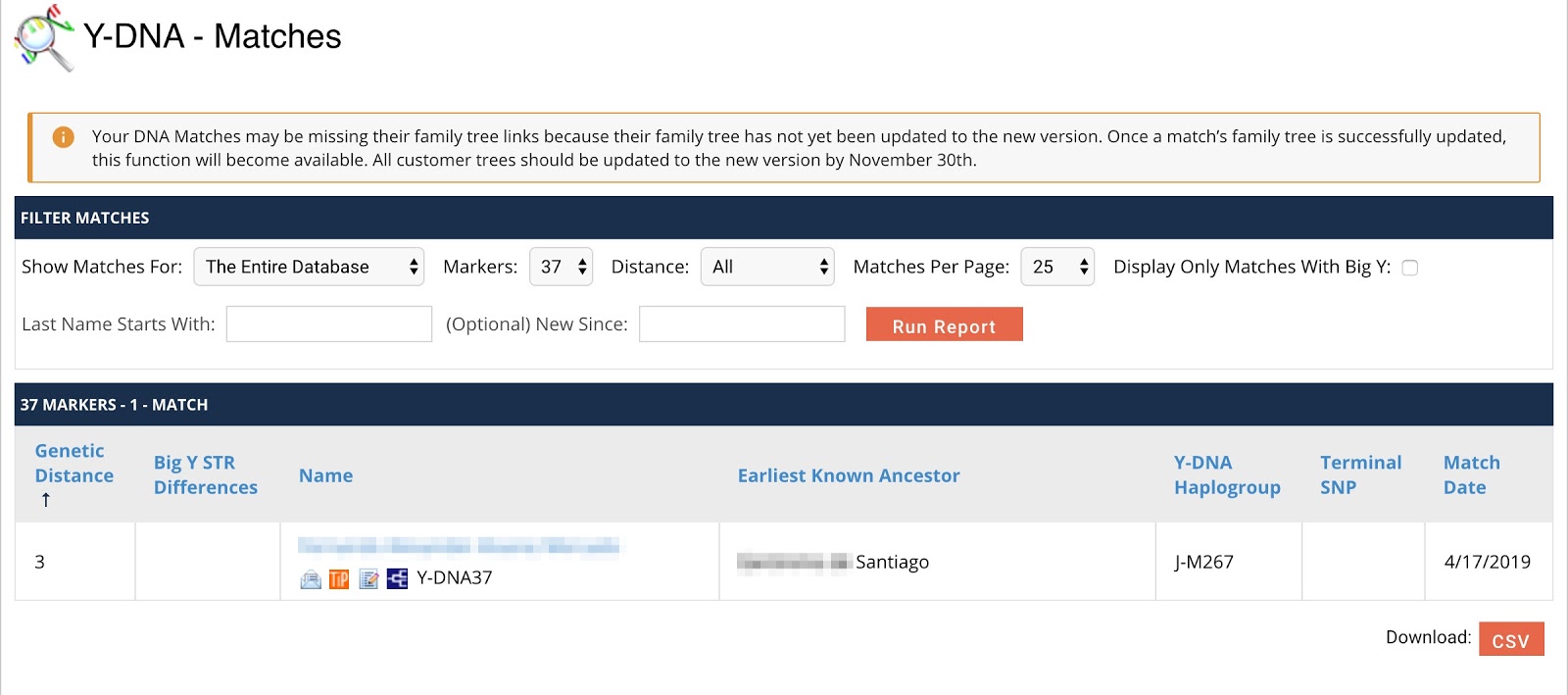
Something to take into consideration also is your DNA haplogroups and connections to others. For example, my grandfather has the Y-DNA haplogroup J1e which is commonly associated with Jews (but also with Muslims/Arabs). Since it originates and concretes in the Near East, it can be from either one of these groups. This leads me to believe that one of my original Correa ancestors was from Spain and was either a Muslim or a Jew who later came to the new world.
 |
| J1e World Map [23andme] |
 |
| J1 Haplogroup Description [23andme] |
This also leads me to next consideration -- names!
Now this one is tough! Many people believe that having a surname that ends in "-ez" in a guaranteed ticket to claiming Jewish origins. The reason behind is that "-ez" surnames mean 'son of' which was a common naming tradition amongst Jews which can be seen with the modern use of 'Ben'. Therefore surnames such as Pérez, Hernández, Fernández, and González to name a few are considered to be surnames of Jews. Now, this is and isn't possible for some people. Yes, Jews did take on surnames with "-ez" endings but not all did. Some are known to have taken surnames of cities such as Toledo/ Toledano, Zamora, etc. and that some took natural places names such as Ríos, Flores, etc. Again, we can't just say "Yes! They were Jews" without researching and looking into their history.
Even first names can be a hint to a Jewish past, but again -- research, research, research! For example, I just came across an aunt's branch in my tree with "typical Jewish names" for their children. This is the first time on my tree that I have seen children have names that overwhelming point to Jewish origins. The four children's names are : Luz María, Ismael, Abraham, and Benjamin the last three being names that can be found within the Jewish naming tradition. But again, who knows? Maybe this couple enjoyed reading the Old Testament and was influenced by writers with such names. In my family there is a person with a name of Lebanese origin, does it mean we are Lebanese? No, just that that child received that name to honor a Lebanese writer. Therefore, it's hard to tell! Nothing is just black and white in genealogy and when it comes to Sephardic Jews it can definitely be hard to tell.
 |
| Familia Carrero-Medina [Personal Photo] |
Conclusions
For me personally, it has been a work in progress. There are a few branches that I think can potentially identity to have Sephardic Jewish ancestry but I haven't jumped to a definite "yes" just yet! For example, with my J1e haplogroup I have to explore more into the paper trail to see how far this branch was in Puerto Rico before originating somewhere else. This line has been in Puerto Rico since at least the mid-1700s but I would need to search more into the church records to see if they were from Spain and if so from where.
I still have a lot of reading to do to make sure I am aware of these origins without falsely associating names or traditions to Sephardic Jews. There is a lot of "junk research" on the internet as well, so trying to sleuth through that and not get caught up in the wrong information can be hard. There are websites that will tell you to check if your surname is there to be Jewish, but again... thread lightly!
In Puerto Rico, many people already by the 1800s were being documented by the church and I have never seen synagogue records or any other type of church/temple, etc. records for Puerto Rico. And of course, the 1800s is 400 years far removed from the times of the expulsion so proving a certain Sephardic Jewish pedigree can be hard but not necessarily impossible. It takes patience, a bit of luck, and a lot of knowledge on how to use the records and what to look for to actually find those ancestors.
To those searching -- best of luck and hopefully we'll find our ancestors soon!
 |
| Medieval Jewish Manuscript [Google] |