Sunday, October 11, 2015

Cultural Exchange: An Irish & a Canadian in Puerto Rico [Part 1]

It's interesting to see who has lived on the island of Puerto Rico and their lives there. Not everyone that moved to the island stayed, some would hop over to another Caribbean islands, while others (especially in more recent years) would decide to move to the United States to find new opportunities. In an attempt to learn more about the people who have lived in Puerto Rico, either my family or not, whenever I find foreigners I am always interested about their life and how they happened perchance to find Puerto Rico. This post will be about a couple who lived in Puerto Rico in 1910 named Stuart J. Burns and his Martha E. Derby.

San Juan, Puerto Rico - 1910 Census  [Ancestry]

This couple as you can see has origins in Nova Scotia/Canada and Ireland. Searching for their marriage record gave me a bit more information on them. Stuart and Martha Elizabeth were married in San Juan, PR on the 17th of June 1909, Stuart (born about 1878) was the son of W. Fletcher Burns and Henrietta Barus? while Martha Elizabeth Derby (born about 1872) was the daughter Thomas Derby and María (Mary) Elizabeth, and we know that Martha E. had resided in Philadelphia according to this marriage record. With that information we were able to learn about more about Martha Elizabeth and her life before arriving to Puerto Rico.

Irish in Philly

According to records, it seems that Martha Elizabeth was born in Ireland and immigrated with her parents and siblings to the USA where they would settle into Philadelphia, PA. On Ancestry, I was able to find the baptism record for a "Martha Derby" born on the 6th of April 1870 (within the range we had of 1872) in Cookstown, Tyrone, Ireland to parents Thomas Derby and Mary Elizabeth Lytle (same parents' names). 

Irish Baptism - Mary Derby, 1870 [Ancestry]

Cookstown is located in what is today Northern Ireland in County Tyrone as shown in the image below. The town is across the lake "Lough Naugh" and Belfast. Even though Martha Elizabeth was born in Cookstown, according to Thomas' marriage record in 1867, they had been living in Magherafelt, a town not too far from Cookstown and probably the town of origin for Thomas Derby and Mary Elizabeth Lytle. 

Cookstown, Co. Tyrone, Northern Ireland [Google Images]

Knowing this information we were able to find an immigration record for the family from Londonderry, Northern Ireland to New York and we can see that Martha is listed her parents with Thomas, Mary E. and other siblings. The family would have immigrated in 1893, when Martha Elizabeth Derby was 23 years old to the United States.
UK Passenger Record - Derby Family [Ancestry]

The next record we would find is the 1900 Census record, which shows us that Mary Elizabeth would already be widowed with 8 children, meaning that Thomas died somewhere between their voyage and this first census the family appeared on. A death record appears for Thomas Derby showing the same address where Mary Elizabeth Lytle had been living with the children (2226 N 12th St) in Philadelphia. I imagine it was difficult for Mary E. to have lost her husband and so early in their lives in America, plus living with eight children could be a burden (luckily the youngest one Frederick was only 13 years old). It states that Thomas Derby died on the 5th of November 1897 at about the age of 59 years old (born about 1838), meaning that Thomas died only 5 short years after arriving in the USA. Thomas is buried in the North Cedar Hills Cemetery in Philly.

In the 1910 Census Mary Elizabeth Lytle is living with only five of her children, as we know Martha E. would be living in Puerto Rico with her husband Stuart Burns, and later in 1920 with just two children. Mary Elizabeth Lytle would later pass away on the 18th of October 1923 in Philadelphia listed as a housewife and the daughter of James Lytle and Martha Mullen, both of Ireland. Interestingly enough, her death also appears in the "England & Wales, National Probate Calendar", meaning she probably left some sort of will. 

Mary Elizabeth 'Lytle' Derby - Probate Calendar [Ancestry]

The next time we see Martha Elizabeth is in the 1930 Census record listed in Philadelphia with her sister Rebecca Derby and Martha E. is listed as widowed. What happened with Stuart Burns and their marriage? Why did they end up leaving Puerto Rico? Or did she leave alone?… [To Be Continued] 

Monday, August 17, 2015

Another Mystery Solved?

As you can tell by now I've been away for a while but I'm happy to say I have finally completed my last semester and I officially have my Master's degree! But enough about that, more importantly I am here to update something I have been searching for a LONG time now and I think I have finally come to the end of that search. I've had many searches and brickwalls throughout my genealogical years and some have been tough, for example like searching for my ancestors in Martinique and Guadeloupe. This mystery though has been with me since the beginning of my searches in 2004 and even from before when I was being told tales of my ancestors; but today (hopefully finally) I have written proof on the father of my ancestor José Avilés Magraner.

For those who have been reading for my blog (many thanks and I hope you are enjoying my posts!) you know by know the mystery that surrounds José Avilés' father. And for those of you who don't a quick recap: José was said to be the son of a Spaniard who lived in Río Prieto, Lares and that his said surname was "Magraner". After searching for some years through various records, I was able to bring it down the potential father to Damián Magraner or one of his brothers who owned land in Río Prieto, Lares. I deduced that Damián had to be the father for multiple reasons: 1) My 2nd great grandfather and his brother Lorenzo both carried the surname Magraner after their mothers, 2) There were tales in the family about the relationship between a Spaniard and a Puerto Rican woman that produced José, 3) My ancestor worked Damián's land, therefore there was some sort of connection there already in place, and finally, probably the most important 4) Both José and Lorenzo named a son "Damián".

Now the problem lied in proving this relationship. In NO document that I have does Damián appear as the father of the children. This I ended up deducing had to deal with the fact that Damián was a married man back in Sóller, Mallorca to an Antonia Morell Pons and that a man of his status could not recognize bastard children. I was pretty convinced that Damián was the father and even traveled to Sóller, Mallorca while I was abroad to learn more about Damián, his family, and his life on the islands (both Puerto Rico and Mallorca). But I left with no real clue, still with just coincidences and theories in my head. But recently I discovered a single document that could finally piece it all together!

Recently I learned about the "U.S. Social Security Applications and Claims Index, 1936-2007". At first glance I thought it was just the SSDI but when I typed in the search engine family names, I was getting information that the latter didn't have. For example, the Applications and Claims Index sometimes provides names of parents which the SSDI (Social Security Death Index) does not do. So I wondered, could these new documents shed light on my Avilés Magraner ancestors? At first, I started searching just for José Avilés Magraner with both surnames and just one, but I couldn't find anything. I actually have been having a lot of trouble finding his SSDI and death date since no one in my family is too sure when it was. My next best thing was Lorenzo Avilés Magraner who I did have a death record and date for, so I decided to give it a shot. My first results gave me a Lorenzo Avilés from Lares, Puerto Rico and I figured it definitely had to be my 2nd great grand-uncle.


Search for Lorenzo Avilés Magraner [Ancestry]

Even though it didn't mention a Magraner surname, I figured I should just click on it and see what the results would yield. There were the odds that nothing would come back besides his name and his birth and death date, so I crossed my fingers. Keep in mind that I've been constantly faced with a blank spot in the section of "father's name" so I really didn't expect anything new. Except this was the FIRST time that I was thoroughly surprised and completely elated. This time there WAS a father's name! And it mentions exactly who I thought it was: Damián Magraner!


Granted there is always room for error, and that goes without saying for everyone, not just me when dealing with names and genealogy. But I'm happy to FINALLY see a name for a father and that it was the one who I have been betting my money on this whole time. I've ordered Lorenzo's Social Security Application (form SS-5) and I'm hoping that there it does mention Damian Magraner as his father. I really am glad that I now have a record which mentions Damian as the father! I guess I can officially say I have a third great grandfather from Spain and that the tales that were told had some truth to them! 

I would still love to find an Avilés descendant and test their Y-DNA to hopefully one day find a Magraner descendant and see if they match up, this would truly be the only way to once and for all close shut this mystery. Until then, I'll wait for Lorenzo's social security application and be happy with how far I have gotten.

Take a look at those documents, you never know if they can answer some questions for you as well! Just remember the years are from 1936-2007! Happy hunting! 

Monday, June 15, 2015

How a RAOK Broke my Guadeloupean Brick-Wall

[Google]

A few months back while I was still in Madrid studying abroad, I received a message from another 23andme member wondering if I needed any help searching for my ancestors in Martinique. As you might already know, offering your help to others is known as a RAOK or Random Act Of Kindness, and in the genealogical community, you can surely find it pretty easily with people sharing their knowledge either with documents, countries, or languages in order for others to find their ancestors. Luckily, I had figured out the mystery of my Martinican ancestors with the help of David but I was stuck on the Guadeloupean side. Where was Gustave Jean Charles from? We know he had been married in Basse-Terre previously to a Françoise Jackson but with no marriage certificate or town of origin for Gustave we were stuck. We knew Françoise was from Marie-Galante but there was no marriage certificate for them there, or basically in any other town… my search was so thorough that I pretty much searched all of the towns nearby Basse-Terre and other parts of the island, such as Point-à-Pitre. However, no luck. So I told this member about Gustave and all the information I had on him, such as his occupation, estimated birth year, his mother's potential name of María Luisa, and his marriage to Françoise Jackson. We exchanged some messages about Gustave Jean Charles, and to be honest, I wasn't very hopeful. I knew that my search had been ongoing now for a couple of years and since I had searched most of the island, I had a feeling that he might actually be from Saint Thomas or another Caribbean island. When I received the response starting with "I found him" my heart dropped, could this really be Gustave Jean Charles?!?

An island of an island 

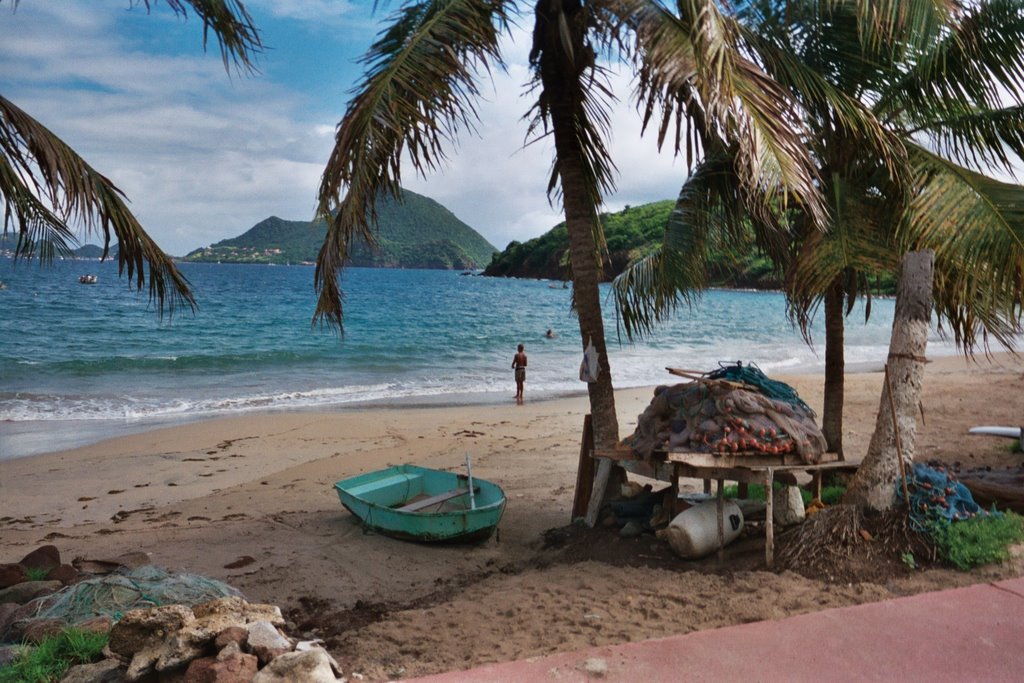
Pompierre, Terre-de-Haut, Les Saintes

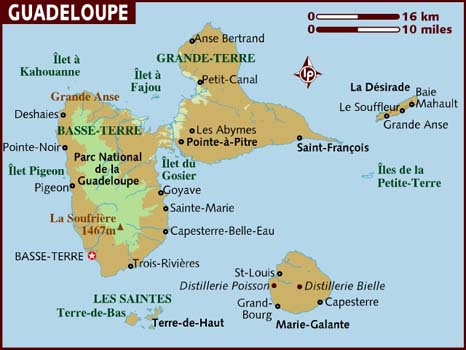
The message continued with, "he is not from Basse-Terre but from Terre-de-Bas (Les Saintes)". My initial reaction was "HUH?!" Terre-de-Bas? Where's that? I've searched all of Guadeloupe and I haven't seen that town! But of course, I had stupidly ruled out a tiny island belonging to Guadeloupe, just below the area of Basse-Terre, and of course, it would be MY ancestor to have lived there!! The chain of islands, known as Les Îles des Saintes, include the islands of Terre-de-Bas and Terre-de-Haut (part of 9 islands in total). The island's population is rather small and because of its rather 'different' influx of immigrants, the islands diversity isn't completely the same as mainland Guadeloupe, "the archipelago of Les Saintes is mostly populated by the descendants of colonists from Brittany and Normandy, and inhabitants of Poitou, Saintonge, and Anjou who are mostly from the first French families that lived on Saint Christopher and Nevis when it was a French colony. The population has the peculiarity of being primarily of European origin and speaks a variety of popular American French, with some terms of Old French" [Wikipedia]. This would explain why Gustave Jean Charles' descendants carry a European Y-DNA haplogroup! 

Guadeloupe [Google]

The messages then began to flood my inbox with new documents, information, dates, and names. I was completely flabbergasted, could it be possible that my search for Gustave Jean Charles was really coming to an end?! After so much time wondering, contemplating, and trying to figure out where or who Gustave Jean Charles, were the walls finally starting to come down! 

A New Name in the Mix

When I glanced over the marriage record I was sent from 1843 in Terre-de-Bas, my first reaction was "OH OH! this isn't the same man". The marriage record was for a Gustave Chaleau and a Françoise Jackson, but I don't know a Chaleau! As I started reading the record I started to realize that this in fact was my ancestor and I'll explain why in a bit. The record stated that "the sir Gustave Chaleau, 21 years old [born about 1822], a sailor, born and domiciled in Terre-de-Bas, of age, the legitimate child of Chaleau Jean Charles and Marie Lucie, both landowners and domiciled on this island; and the miss Françoise Jackson, 20 years old [born about 1823], a seamstress, born on the island of Marie-Galante and living in this community, the natural daughter of Clarice Jackson, a laundress, domiciled at Point-à-Pitre, both appeared for marriage". 

For starters a lot of the information matched up, such as Françoise being from Marie-Galante and Gustave's birth year, his profession dealing with boats/sea, and especially that his mother was named Marie Lucie (which in Puerto Rico was translated to María Luisa). What's also important here to notice is that Gustave's father was named Chaleau Jean Charles, therefore we know that the Jean Charles name is there somewhere and as we know, the names did jump around in Puerto Rico so for it to happen in Guadeloupe wouldn't be so surprising. Also, luckily there was signature for Gustave which was similar to his Puerto Rican signature: 


Here on the right you can see his Puerto Rican signatures, if you focus on the first way he wrote Gustave you find some similarities to his signature in Guadeloupe. His signatures are a bit sloppy but this is probably due to the fact that he was in his 60s when signing as a witness in Puerto Rico. Here on the Terre-de-Bas signature we can see that Gustave signed with this new name of Chaleau, which has never appeared in any Puerto Rican records. The mystery of this new surname though can easily be solved with the help of another document -- the freedom record of my 5th great grandfather, Chaleau Jean Charles. 

A Free Man

My 5th great-grandfather Chaleau Jean Charles was manumitted from slavery on the 26th of August in the year 1842. Though it doesn't state who was his master, it does state that Jean Baptiste Caille came forward along with Paul Désiré Petit during his manumission. David has told me that it is possible for one of them to be an owner or even friends, though the record does not state an relation between the men. It states that Chaleau Jean Charles at the time of his freedom was 56 years old and a carpenter (which makes sense since various of his descendants would also take up this job!). It also states that he was a native of Terre-de-Bas, meaning that he was born there and not brought over as a slave like on my Martinican side of the family. However we don't know who Jean Charles' parents were and where they were born.   

Nº 8 Chaleau Jean Charles - Manumission, 1842 [ANOM]

So we see that Chaleau and Jean Charles were probably his names and out of there comes the confusion of using either "Chaleau" or "Jean Charles", and in some records they use Jean Charles as the surname rather than Chaleau. Most likely he was known as "Jean Charles" most of his life and then the Chaleau was added later on as a surname, however Gustave stuck with Jean Charles when he immigrated to Puerto Rico and even his other son goes back and forth between both Chaleau and Jean Charles on records. 

With his new found freedom, Chaleau Jean Charles was able to marry the next year and married on the 4th of September 1843 my 5th great grandmother Marie Lucie; two months later his son Gustave would marry Françoise Jackson. Chaleau Jean Charles' marriage record states that he and Marie Lucie were both from Terre-de-Bas and he 56 and she 55 years old. Their record also states that before this said marriage, together they had three children who apparently were: "inscrits sur les régistres de l'état civil de cette dite commune, de leurs actes d'affranchissements, en dite la premier janvier mil huit cent trente trois" meaning that the children were registered in the records for manumission on the 1st of January in 1833, records which I have yet to find! These three children include Charles (aged 23), Adelaïde (aged 28), and Gustave (aged 19) all living on said island. It's nice to see that Chaleau Jean Charles and Marie Lucie were able to marry! And even though Chaleau Jean Charles wasn't able to sign his own name on his marriage record, it's interesting to note that his son - my 4th great-grandfather  Gustave - at only about 19-20 years old was able to sign his own name, which makes me wonder about their education and childhood upbringing as slaves. 

Conclusions

At this point, I'm fairly certain this is the same man, just like with the records in Martinique, there are far too many coincidences for me just to brush it off. Because things like the name, year of birth, and especially the mother's name matches, I'm fairly confident that these two men are one and the same. I can't believe that that my search for Gustave Jean Charles is over, especially with all the confusion in the records and the craziness that was name order in Puerto Rico. Goes to show that with constant searching and some help a lot can be achieved. My next goal is to try and find out more information about Jean Charles and Marie Lucie, for example we know that Jean Charles was manumitted in 1842, but Marie Lucie seems to be manumitted in the year 1832 along with her children. I wonder why so much earlier then he was. Were they from two different plantations or owners? I don't know much more about the family and I would like to hopefully one day find where they were from before Terre-de-Bas. 

I'm excited to finally have names of towns in Guadeloupe and Martinique, and I can't wait to hopefully one day visit these two places. I can't wait to add more pieces to this puzzle, or rather make this picture a bit clearly in regards to their life on these French islands and the history that comes along with them to Puerto Rico. So happy that I can add more to my own story of my ancestors especially to a branch of my family that was so closed off to me genealogically for many years. 

Remember to keep searching, asking questions, revisiting documents and never give up! Sometimes it takes stepping away from a puzzle in order for you to gain a new outlook on how to potentially solve it. For any Puerto Ricans that might have ancestors from Guadeloupe and/or Martinique, feel free to reach out to me if you have any questions on how to get started on finding those ancestors. Also, I have written about it on my blog what feels like extensively, so feel free to poke around and read other posts for some tips and tricks. 

Can't wait to see this view one day! :D

Grande-Anse, Terre-de-Bas, Les Saintes, Guadeloupe [Google]

Sunday, June 14, 2015

¡Yo Soy Boricua, Pa'que Tú Lo Sepas!

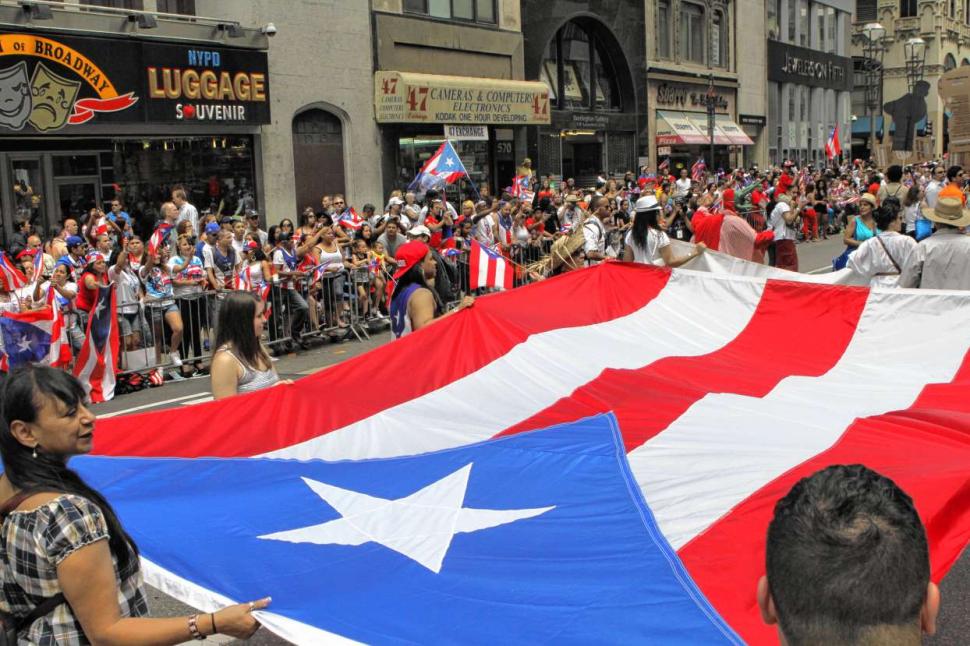
Puerto Rican Day Parade 2015 [New York Daily News]

Today was the Puerto Rican Day Parade in New York City, a heavily attended event by both Puerto Ricans and non-Puerto Ricans from all over! This day, as many Puerto Ricans know, is a great time to decorate your house, car, and yourself with Puerto Rican flags and other paraphernalia to represent 'la isla del encanto'. One of my favorite sayings that you can hear on this day is: "¡Yo Soy Boricua, Pa'que Tú Lo Sepas!", which roughly translates to, I'm Boricua (Puerto Rican), just so you know!". 

What I found interesting was that this year the parade was dedicated not to a town but to Pedro Albizu Campos, a man who isn't really known to the everyday Puerto Rican but in historical and political circles is known fairly well. This year marks the 50th anniversary of Albizu Campos' death which was earlier this year on the 21st of April. Pedro Albizu Campos is known for his fight for independence for the island of Puerto Rico as the president of the Puerto Rican Nationalist Party. There is a lot of history that goes with learning about Puerto Rico's past, especially during the times of rallying for independence.

One of the most shocking things that I learned was about Law 53 of 1948, which was better known as the Gag Law or Ley de la Mordaza. This law was established with the purpose of suppressing any independence movement in Puerto Rico. Therefore, "The act made it a crime to own or display a Puerto Rican flag, to sing a patriotic tune, to speak or write of independence, or meet with anyone, or hold any assembly, in favor of Puerto Rican independence" [Wikipedia].

Kind of makes you wonder if this is why Puerto Ricans are so fiercely proud of their flag, culture, and ways, passed down for grandparents and great-grandparents who weren't allowed to proudly display a flag, or even sing a tune that could remind someone of independence. This law is one of the many things that happened on the island that a good number of Puerto Ricans do not know about. I'm not sure if it is taught on the island but I know that many mainland Puerto Ricans have never heard of the law or even about Pedro Albizu Campos.

The Puerto Rican Day Parade is a great time to learn more about the island, get in touch with your roots, dance some Salsa, and eat some good pernil, but also a great time to learn some more history of the island as well! Do not forget those who came before you and their struggles to get us to where we are! 

Sunday, June 7, 2015

52 Ancestors – #52 María Inocencia Avilés (1876-1903)

Finally, ancestor #52! Took me a while to get here and I didn't finish how I had wanted to on time but I'm glad to be on this post none the less! This post seems like a full circle for me since the tale of this ancestress is what sparked and fueled my interest at the age of 14 when I began all of these genealogical searches. Therefore, this post will be dedicated to my 3rd great-grandmother, María Inocencia Avilés.

María Inocencia Avilés (from now on just Inocencia Avilés), was from the town of Lares, Puerto Rico where a branch of my paternal family resided for about 3-4 generations. Inocencia was born about 1876 probably in Río Prieto where her children would be born, and equally like her children, Inocencia was the product of a unwedded parents. So, we only know Inocencia's mother name which was María Avilés Hernández, native to the town of Añasco, Puerto Rico. Inocencia in our family lore was a pure Taíno women who had the son of a Spanish man who was visiting the island during the time of war. The story, which I'm still trying to pick apart and separate truth from fiction, could have some truths to it after all. From my research, José Avilés' father could be Damián Magraner Morell, a Spanish man who my ancestors worked for in the 1900s in Río Prieto, Lares, Puerto Rico. Only DNA can confirm this connection to the Magraner family and the tale of Inocencia being Taíno. So far we know that Inocencia had to be some type of mix, seeing as how her death record she was reported as 'blanca'. Of course, records are never always correct but DNA can definitely help point us in the right direction.

Recorded children for Inocencia currently stand at 5 children: José, María Isabel, Lorenzo, Isabel, and Juan; the first four possibly children of Damián while we have no idea who Juan's father was and Juan died as an infant, only 3 months old.

Unfortunately, I don't know too much about Inocencia's life since she died at a fairly young age, at about the age of 27, due to Anemia. If Inocencia's age is correct in her records, that would mean that she was about 14-15 years old when she had her first child, my 2nd great grandfather, José Avilés. Which is kind of crazy since she was a young, unwedded girl so I imagine there was stigma attached to her fairly quickly for what occurred. And if Damián really is the father to José then it paints a different picture for me of who he was as a man.

None the less, I would like to learn more about Inocencia, her life in the mountain town of Lares, her interaction with the Magraner family and what it might have been like for her during the Spanish-American War. She would have been fairly young when Spain gave over the island to the USA and it would be interesting to see what a young person at the time would have thought about this change.

I'm happy to have done the 52 Ancestors Challenge since it gave me a chance to revisit certain ancestors I hadn't looked into in a while, and learn more about who they might have been as people during their respective time periods. 

Friday, June 5, 2015

52 Ancestors – #51 Juana Burgos Vásquez (1839-1899)

So FINALLY getting around to finishing up the last two posts of the 52 Ancestry Challenge -- better late than never right!? This post will be about my 4th great grandmother, Juana Burgos Vásquez.

Juana Burgos Vásquez was from the town of Yabucoa, Puerto Rico in the southern part of Puerto Rico.  My family has been in this town for a good number of years and only recently in about the 1950s migrated out and into the San Juan area to look for better opportunities. However, there are still distant cousins that live down in Yabucoa and still own some of the land our ancestors worked on back in the 1800s, which is pretty awesome!

Yabucoa, Puerto Rico [Google]

Juana Burgos, according to the death certificate I found, died on the 14th of April of 1899 in Yabucoa, Puerto Rico. She was a bit of a hard ancestress to track down because records only listed her as "Juana Burgos" and never mentioned a second surname which is important in Puerto Rico especially when there are people with such common names. What I ended up doing was going through the index death records for the town and searched for all the Juana Burgos mentioned on the index and one by one searched them up to see if they could match my 4th great grandmother. Some were too old, some not married, and some too young, but finally I found one in 1899 that could match my 4th great grandmother's years and martial status.

By the year 1899, Juana Burgos would have been 11 years widowed from her husband, Manuel de Santiago. Since it seems that Juana and Manuel only had one daughter, my 3rd great grandmother Dolores, Juan Ortiz Lebrón (probably a neighbor) appeared to announce her death. He was aware of her parents, Eusebio Burgos and Monserrate Vásquez but probably not of Dolores, who already in 1899 was off taking care of her 8 children with her husband Benito Orozco. It is always possible that this death certificate isn't the correct one for my Juana Burgos but with the information I have and knowing that Juana lived in Yabucoa, the odds are high that this is my 4th great grandmother.

There is no mention of race in her death certificate, but through my MtDNA we know that Juana was a carrier of the C1b4 who she passed to Francisca Orozco Santiago (2nd great grandmother), and eventually to my grandmother, mother, and me. I'm guessing based off the future descriptions of her children and grandchildren, that Juana, like them, was of a mixed race background.

Some documents state that Juana's parents were from Las Piedras, which is a town just north of Yabucoa. Even though my ancestors lived in Calabazas (a town bordering Maunabo), you can see that Las Piedras isn't too far off for them to have traveled from. They could have easily made their way down through Jácanas or Tejas and Limones until they reached Calabazas, and stayed for whatever reason.

Yabucoa's Barrios [Google]

I'm hoping to one day head down to Yabucoa, see the town of Calabazas, and hopefully meet some of my cousins who still live there! 

Where in the World is Luis (San Diego)?!

So finally after being abroad for 8 months, I'm finally home in New York! Even though I've been home for about two weeks now, I think I'm finally hitting my "Okay, you're settled and you have time for things now" phase. I've ignored this blog for a bit which I never like to do in the first place, but hopefully now I'll be able to catch up on some posts that I've wanted to write but didn't get the chance to with all my work and traveling during the spring semester. This summer I'll be pretty busy as well finishing up my Master's program but hopefully I'll be able to add some posts here and there and keep the blog active again! For those who might be interested, here's a map of all the places I was fortunate enough to visit while I was living abroad in Spain, these are 8 months worth of cites and towns I visited during vacations and weekends. I definitely had a great time living abroad in Europe but I'm happy to be home with friends and family!

Travel Map of 2014-2015

Here's to more posts about my genealogical adventures both on paper and in person! :)